Palestinian Election Delay Adds Governance Risk for Gaza’s Digital Economy
Mahmoud Abbas moved parliamentary and presidential votes to September 2027, raising fresh questions over governance, aid flows and financial infrastructure.
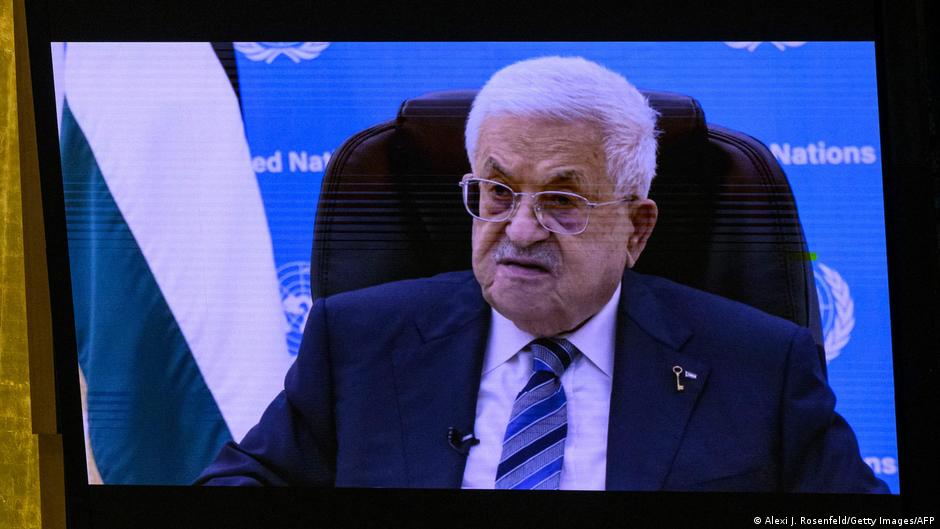
Palestinian Authority President Mahmoud Abbas has postponed elections in the Palestinian territories from late November to September 11, 2027, according to WAFA, pushing back what would be the first nationwide Palestinian vote in more than two decades. The decision covers parliamentary elections and, on the same date, the choice of a president.
For financial markets and the digital economy, the move adds another layer of political uncertainty to a region where payments, banking access, humanitarian disbursements and cybersecurity already sit under severe pressure. The postponement affects the West Bank, East Jerusalem and the Gaza Strip, territories whose economic systems have been shaped by conflict, movement restrictions, fragmented administration and dependence on external support.
WAFA cited Israeli military restrictions, the expansion of Jewish settlements, attacks by armed settlers and the lack of freedom of movement as reasons for delaying the vote in the West Bank, East Jerusalem and Gaza. In relation to Gaza, the agency also pointed to instability and a delay in the deployment of international security forces.
Israeli Foreign Minister Gideon Saar rejected that framing and accused the 90-year-old Abbas of misleading the international community with what he described as false claims that Israel had created obstacles to voting. Saar said Abbas was trying to avoid responsibility and accountability.
Mahmoud Abbas is trying to evade responsibility and accountability, Israeli Foreign Minister Gideon Saar said.
Criticism of the postponement also came from within the ranks of Fatah, the Palestinian national liberation movement to which Abbas belongs. That internal criticism matters for investors, donors and technology providers because political cohesion is a key variable in rebuilding or maintaining financial systems, especially in Gaza, where basic institutional control remains contested and transitional.
Why The Delay Matters For Payments And Banking
The immediate story is electoral, but the practical implications extend into the systems that move money. Any postwar economic framework for Gaza depends on trusted public administration, reliable identification, bank connectivity, compliance channels and secure mechanisms for aid delivery. A postponed national vote does not by itself determine those systems, but it complicates the governance timetable behind them.
The source article states that the planned elections would be the first nationwide Palestinian elections in more than two decades. That long gap is significant for digital banking and fintech because financial infrastructure depends not only on technology, but on recognized institutions that can supervise, regulate and coordinate with foreign governments, banks and aid organizations. In politically divided or transitional environments, payments can become slower, more expensive and more exposed to compliance bottlenecks.
Earlier in April, the first municipal elections in 20 years were held in Deir al-Balah in the Gaza Strip. Candidates on most electoral lists were close to Fatah or ran as independents. That local vote offered a limited example of political process resuming under difficult conditions, but the postponement of broader parliamentary and presidential elections leaves the larger governance question unresolved until 2027.
The timing is especially sensitive because of Gaza’s postwar administration plans. In October 2025, Israeli authorities and Hamas agreed to a ceasefire under a peace plan developed by the administration of U.S. President Donald Trump. The United States, Turkey, Qatar and Egypt acted as guarantors of the arrangements between Israel and Hamas. During the first stage, Hamas militants returned all remaining living Israeli hostages in exchange for the release of Palestinian prisoners from Israeli jails.
In mid-January, the White House said the second stage of Trump’s plan to end hostilities in Gaza had begun. Under that phase, a National Committee is supposed to take over governance of the region until the Palestinian Authority is ready to assume that role. The delay in national elections therefore intersects directly with the question of when and how the Palestinian Authority can gain the mandate and capacity to administer Gaza.
Cybersecurity And Compliance Risks Remain Elevated
The regional security backdrop remains central. The Middle East situation escalated sharply on October 7, 2023, when Hamas, designated a terrorist organization by the European Union and the United States, launched a large-scale attack on Israel. Militants fired a massive rocket barrage, entered Israeli territory and carried out the deadliest massacre of civilians in the history of the modern Israeli state, killing about 1,200 people.
Hamas militants also seized about 250 hostages and took them to Gaza. Some were exchanged or released, while others died. Israel responded by declaring war on Hamas.
For banks, payment processors, crypto platforms and technology firms operating near or adjacent to the conflict, such facts define the risk environment. Sanctions screening, anti-money-laundering controls, counterterrorist financing rules and cyber defense are not peripheral concerns; they are core operational issues. A delayed electoral process can make due diligence harder by extending uncertainty over who will hold recognized authority in the territories and what institutions will be responsible for oversight.
The article does not cite any direct market reaction, technology stock movement or crypto-specific measure tied to Abbas’s decree. Still, the governance delay is relevant to the digital economy because investors tend to price institutional clarity into infrastructure decisions. Telecom networks, digital identity projects, remittance corridors and aid payment systems all require counterparties that can be trusted and audited.
For fintech firms, the key issue is not whether an election date alone changes the business case. It is whether the political pathway toward accountable administration becomes clearer or more fragile. The new date of September 11, 2027, places that answer nearly a year away from the previously expected late-November schedule, prolonging uncertainty for any organization assessing Gaza reconstruction, West Bank financial services, cross-border payments or regional cybersecurity exposure.
The dispute between WAFA’s stated reasons and Saar’s accusation also points to a wider credibility challenge. In digital finance, credibility is infrastructure. If public institutions, foreign guarantors and local factions disagree over the basic conditions for political participation, the same trust deficit can spill into banking relationships, donor platforms and technology deployment.
For now, the facts are clear: Abbas has moved the parliamentary and presidential vote to September 11, 2027; Israeli officials accuse him of using Israel as a pretext; criticism has emerged from within Fatah; and Gaza’s future administration remains linked to a ceasefire framework guaranteed by the United States, Turkey, Qatar and Egypt. The financial consequences will depend on whether that framework can deliver stable governance before the next electoral milestone arrives.