Putin Signals US-Mediated Ukraine Talks but Rejects Front-Line Freeze
The diplomatic opening leaves geopolitical risks unresolved for payments, crypto markets, digital banks and technology investors.
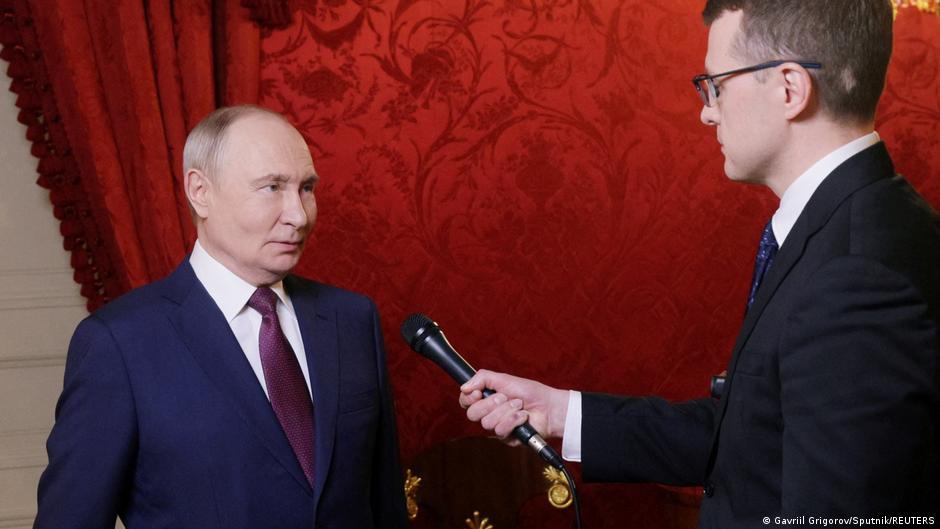
Russian President Vladimir Putin has again said Moscow is prepared to join trilateral talks aimed at ending the war Russia launched against Ukraine, but he rejected the prospect of freezing hostilities along the current front line. The combination of a tentative diplomatic opening and continued disagreement over territory leaves the conflict—and its effects on the digital economy—far from resolution.
In an interview with Pavel Zarubin of Russia’s state-owned VGTRK media group, published Thursday, October 22, Putin said he had agreed during a meeting with US special envoy Steven Witkoff to resume dialogue with Kyiv through Washington’s mediation.
“The purpose of these negotiations will be to discuss ensuring the security of Ukraine and Russia after peace agreements are reached—in their final form, rather than as a result of suspending hostilities for some short period,” Putin said. “We are ready to resume these contacts to achieve this goal.”
Moscow did not disclose what level of representation it would send to any negotiations with Kyiv following Putin’s meeting with Witkoff. Ukrainian President Volodymyr Zelensky has said he is ready for a trilateral meeting with Putin and US President Donald Trump to discuss ending the war. The Kremlin has repeatedly rejected that format or attached conditions that Kyiv did not regard as a serious basis for a meeting, including a proposal that Zelensky travel to Moscow.
Earlier meetings between a delegation selected by Putin and Ukrainian representatives failed to produce tangible progress toward ending the war. Just hours after the Putin-Witkoff meeting, Russian presidential aide Yuri Ushakov said Moscow was “completely dissatisfied” with the proposals brought to Russia by Trump’s negotiators.
Unresolved territorial dispute sustains digital-economy risk
The sharp divide over territory remains the central obstacle. Asked about Zelensky’s statement that Ukraine was prepared to freeze fighting along the current line of contact, Putin responded: “This is not their territory; this is the territory of historical Russia.”
Media reports previously said Trump had supported the idea of freezing hostilities along the front line in the Donbas in 2025, before meeting Putin in Anchorage. Such an outcome would conflict with Putin’s publicly stated demand that Ukraine surrender the whole of the Donbas to Russia without a fight.
For fintech companies, payment providers and digital banks, the absence of a credible settlement means continued exposure to the operational consequences of the war. Cross-border payment routes involving Russia and Ukraine remain shaped by geopolitical restrictions, compliance requirements and elevated counterparty scrutiny. Any negotiation process could influence expectations about future financial connectivity, but Putin’s rejection of a temporary ceasefire framework shows that a rapid normalization cannot be assumed.
Crypto markets also remain relevant to the conflict’s financial dimension because digital assets can operate across borders even when conventional banking links are constrained. However, the source interview did not announce any policy change affecting cryptocurrencies, sanctions or payment infrastructure. For market participants, the immediate significance lies in the persistence of uncertainty rather than in a confirmed shift in regulation or capital flows.
Technology investors face a similar distinction between diplomatic signals and verifiable de-escalation. A resumption of talks may be read as a potential reduction in long-term geopolitical risk, yet previous negotiations produced no measurable result, and Moscow has already expressed dissatisfaction with the latest US proposals. Cybersecurity providers, financial institutions and technology platforms therefore still have reason to treat the conflict as an active operational risk rather than a resolved political issue.
Attacks continue despite claims of readiness for peace
Putin also claimed that Russia “does not want to fight” Ukraine and placed responsibility for continued hostilities on Kyiv. “We are still ready to negotiate and seek solutions to this difficult situation,” he said. “These are people very close to us. The latest genetic studies show that Russians and Ukrainians are one people.” He did not explain how claims about genetics could affect national sovereignty.
The intensity of Russian attacks on Ukraine did not decline after Putin’s meeting with Witkoff. On the day Zarubin’s interview was published, Ukrainian authorities reported several Russian strikes on civilian sites, including a clothing market in Lozova in the Kharkiv region, Kyiv’s historic center, and roads and bridges across different regions. Two people were killed and 34 were wounded in the strike on Lozova.
Continued attacks on civilian and transport infrastructure underline the practical limits of the latest diplomatic language. Damage to roads, bridges and urban areas can disrupt commerce, communications and access to financial services, while wartime conditions increase the importance of resilient digital payments and secure banking systems.
For the fintech and technology sectors, the key signal is therefore mixed: Moscow says it is willing to resume US-mediated contacts, but it rejects a front-line freeze, disputes Ukrainian sovereignty over occupied territory and continues military operations. Until talks produce concrete terms or a sustained reduction in attacks, geopolitical risk will remain embedded in decisions involving regional payments, digital banking, cybersecurity and technology investment.