Serbia Election Uncertainty Puts Digital Economy Investors on Alert
A mass opposition rally in Belgrade signals a tight parliamentary contest with potential implications for fintech and technology investment.

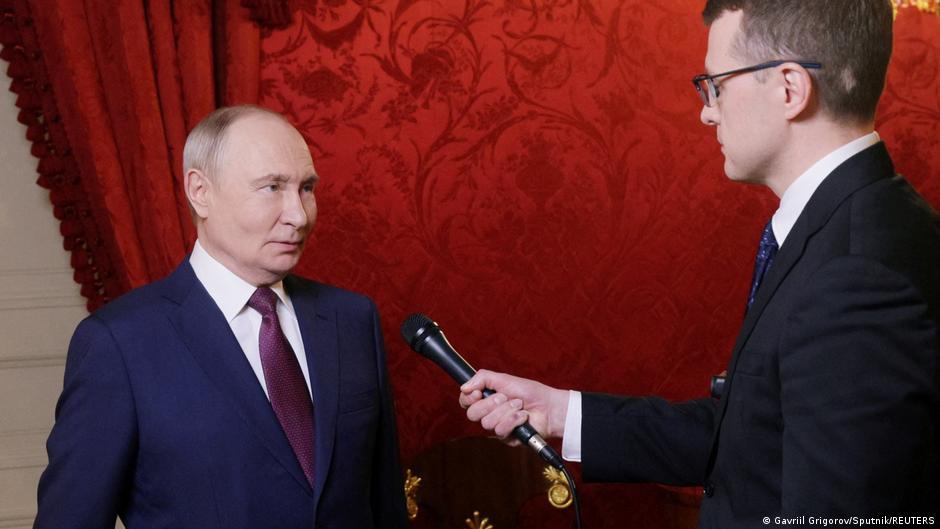
About 150,000 opposition supporters rallied in Belgrade on Thursday, October 22, according to organizers cited by AFP, ahead of Serbia’s snap parliamentary election on October 25. The demonstration underlined the scale of the challenge facing President Aleksandar Vučić and his Serbian Progressive Party, or SNS, as investors in the country’s digital economy assess the prospect of a shift in political power.
Demonstrators called for an end to Vučić’s rule and urged voters to support the Student List, a movement that emerged from a wave of student protests and has developed into a significant political force. Vučić has served as Serbia’s head of state since 2014 and intends to remain in power despite saying that he would resign. He is now seeking the premiership, a position with broader constitutional powers than the presidency.
Although the campaign has centered on political accountability and corruption rather than financial technology, the outcome could matter to digital banks, payment companies, cryptocurrency businesses and technology investors. A close result may affect perceptions of policy continuity, regulatory predictability and institutional stability. The source material does not identify specific proposals from either leading camp on payments, crypto assets, cybersecurity or technology stocks, leaving companies to evaluate the election primarily as a governance risk.
Student movement challenges the ruling party
The snap vote follows almost two years of protests triggered by the November 2024 railway station disaster in Novi Sad. Sixteen people were killed when a canopy collapsed at the station shortly after renovation work had been completed. Serbian independent media and opposition groups identified corruption as one of the principal causes of the tragedy.
Students became the main force behind the ensuing nationwide protest movement. The Student List grew out of those demonstrations but has no obvious leader and is not fielding professional politicians. Instead, students want academics, activists and public figures to represent them.
The Student List’s unconventional structure has turned a protest movement into an electoral force capable of challenging Serbia’s governing party.
Polling suggests that approach may produce results. A survey by the New Serbian Political Thought project, published on October 20, put the Student List at 44.5% and the SNS at 42.7%. An equivalent poll in early October showed the Student List with 44.4% support and the governing party with 41.7%.
Most Serbian opposition parties have withdrawn from the race and called on voters to support the students. That consolidation has sharpened the contest into a test of whether the protest movement can convert public anger into parliamentary power.
Governance questions reach the digital economy
For fintech companies and digital investors, the most relevant issue is not a disclosed sector-specific policy divide but whether the election changes the direction and credibility of state institutions. Payment providers and digital banks depend on consistent regulation and public confidence, while crypto businesses are particularly sensitive to shifts in enforcement and compliance expectations. Cybersecurity planning also requires stable coordination between government agencies and private infrastructure operators.
Technology equities and private investment can react to political uncertainty even when an election campaign offers few detailed digital policies. A transition led by a decentralized movement of academics, activists and public figures could open a new phase in policymaking, but the Student List’s lack of a clear leader may make its governing priorities harder to anticipate. Conversely, an SNS victory would preserve the party’s control while moving Vučić back into the premiership.
The students have demanded Vučić’s resignation since protests began in 2024. He repeatedly said he would take that step, but his planned candidacy for prime minister means he is effectively seeking to change offices rather than leave power. If the SNS wins, Vučić would remain Serbia’s dominant political figure.
Under Serbia’s Constitution, the prime minister has wider powers than the president. Vučić nevertheless became the best-known face of the governing establishment during his presidency. He previously served as prime minister from 2014 to 2017, leaving the post after winning the presidential election. Every Serbian prime minister since then has represented his party.
The October 25 vote therefore presents two markedly different political scenarios without a clearly defined fintech platform attached to either one. A Student List victory could disrupt the governing structure that has shaped Serbia for years, while an SNS win would reinforce continuity under Vučić in a more powerful office. For digital-economy businesses, the immediate focus will be the credibility of the result, the composition of the next government and whether political tensions interfere with predictable regulation, investment decisions or the operation of critical digital services.