Russia Adds StopTime Musicians to ‘Foreign Agents’ Registry
The designation highlights how Russia’s regulatory controls increasingly affect creators who depend on social platforms and digital services.
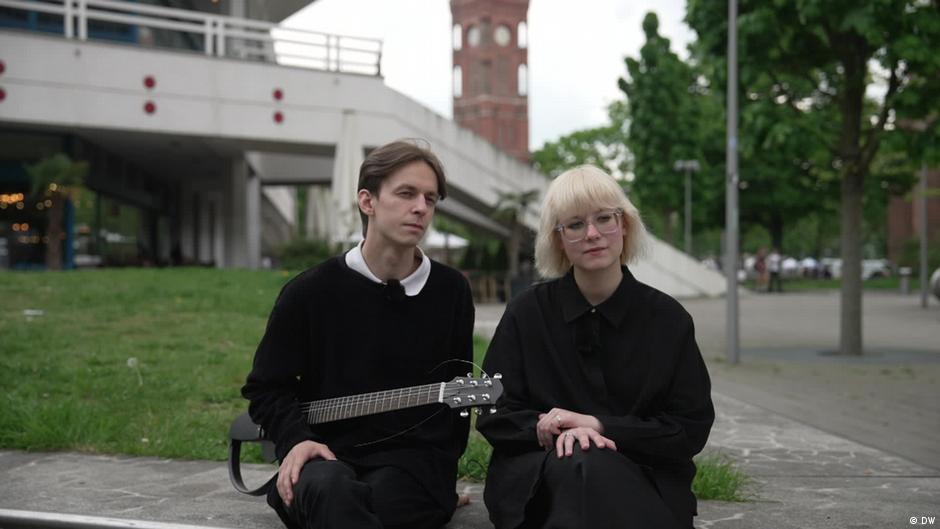
Russia’s Justice Ministry has added two members of the street-music group StopTime to its register of “foreign agents,” extending a regulatory system with implications for the country’s digitally connected creative economy.
The new designations cover 19-year-old vocalist Diana Loginova, who performs under the name Naoko, and her husband, 23-year-old guitarist Alexander Orlov. The ministry published the information on its website on Friday, October 16, exactly one year after the musicians received their first administrative detention.
In its justification, the ministry said Loginova had opposed the war in Ukraine, “spread false information” about the decisions and policies of the Russian authorities, and interacted with people designated as foreign agents. It alleged that Orlov had, among other activities, “actively participated in the distribution of anti-Russian materials.”
The official register was also expanded on October 16 to include the movement Malinovy Klin — Independent Kuban. According to the authorities, the movement had, among other things, called for a violation of Russia’s territorial integrity.
Digital platforms at the center of the case
Although the action concerns musicians rather than a financial or technology company, the case illustrates the growing intersection between state regulation and the digital infrastructure used by independent creators. StopTime announced its street concerts through social networks, showing how online platforms can turn a local performance into a coordinated public event and expand its audience beyond those physically present.
For participants in the broader creator economy, a foreign-agent designation can introduce additional compliance and reputational considerations around online publishing, platform access and commercial relationships. The ministry’s public register itself functions as a digital enforcement mechanism, allowing platforms, businesses and other counterparties to identify people and organizations carrying the designation.
The source material does not specify whether Loginova or Orlov used digital payment tools, received online donations, held cryptocurrency or maintained commercial relationships with banks and fintech companies. It also does not report any restrictions imposed on particular accounts, cards, wallets or payment services. Any direct financial consequences for the musicians therefore remain unclear.
Even so, the episode is relevant to digital-economy operators because creators increasingly rely on a connected stack of social media, ticketing, streaming, messaging and payment services. Regulatory decisions affecting a creator’s legal status can require platforms and commercial partners to reassess compliance exposure, content policies and customer relationships. These issues are particularly sensitive for digital banks and payment providers, which must balance automated screening, cybersecurity controls and regulatory obligations without treating unverified assumptions as established facts.
StopTime’s concerts were announced on social networks, linking street performance with the digital channels used to organize audiences and distribute content.
A year of arrests and escalating pressure
StopTime began performing on the streets of St. Petersburg in spring 2025. Alongside Loginova and Orlov, the group included drummer Vladislav Leontiev until January 2026. Its performances featured songs by Noize MC, Monetochka, Zemfira and the band Pornofilmy, all of whom have been designated as foreign agents by the Russian Justice Ministry.
During one performance in October 2025, the group played Noize MC’s “Kooperativ Lebedinoye Ozero,” or “Swan Lake Cooperative.” A St. Petersburg court had classified the song as information prohibited in Russia in May.
The designation of Loginova and Orlov came exactly a year after the first administrative detention imposed on them and Leontiev. The musicians were found guilty of organizing a mass event that authorities said caused a disruption of public order. The case concerned a concert near the Ploshchad Vosstaniya metro station, which police said was attended by 70 people.
Immediately after the first detention periods expired, authorities drew up new administrative reports against the group members. These successive proceedings, sometimes described as “carousel” protocols, kept the musicians in custody almost until mid-November.
After their third consecutive detention, Loginova and Orlov left Russia. Leontiev remained in the country and consequently departed the group.
The case adds to the compliance uncertainty surrounding Russia’s online cultural sector. Social networks can help independent performers build audiences quickly, but the same digital visibility can expose their activity to regulatory scrutiny. For fintech companies, digital banks and technology platforms, such cases underscore the importance of monitoring formal legal designations while distinguishing documented restrictions from broader assumptions about a person’s access to financial services.
No impact on publicly traded technology stocks, cryptocurrency markets or the wider Russian payments sector was reported in connection with the October 16 decision. Its significance for the digital economy instead lies in the regulatory signal: online reach, content distribution and real-world organization are increasingly interconnected, creating complex risk assessments for platforms and financial intermediaries serving creators across borders.