Russia Opens Three-Day Duma Vote as AI Fake Claims Cloud Election Oversight
The parliamentary election extends voting to occupied Ukrainian territories while officials warn of AI-generated polling-place videos.
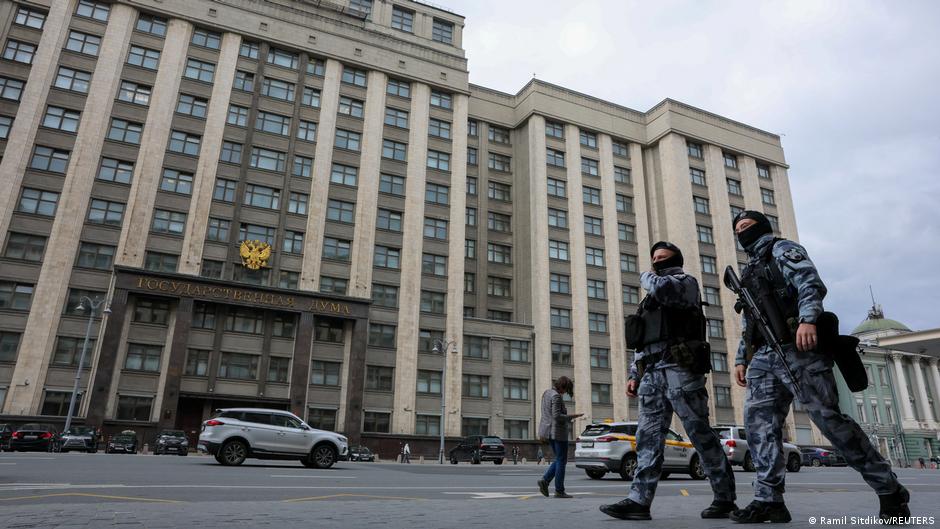
Russia officially began three days of voting for the State Duma on Friday, September 18, opening a parliamentary election that now intersects with the country’s digital economy, information controls and cybersecurity narrative. Polling stations opened first in Kamchatka and Chukotka at 08:00 local time, with voting scheduled to continue through September 20. In each region, polling places are due to remain open until 20:00 local time.
The vote will determine the next convocation of the 450-seat lower house of parliament. Half of the deputies are expected to be elected in single-mandate districts, where voters choose specific candidates. The remaining 225 seats will be distributed through party lists. Ten parties appear on those lists after the Yabloko party, which had criticized the war in Ukraine, was removed from participation on formal grounds. Some Yabloko candidates remain in the race in single-mandate districts in several Russian regions.
For FinPulse readers, the election is also notable for the way Russian authorities and pro-government media have framed digital trust. Ahead of voting, pro-government outlets circulated videos suggesting that footage of ballot-stuffing or falsification at polling stations could be created with artificial intelligence. Ella Pamfilova, chair of Russia’s Central Election Commission, also said such technologies could allegedly replace or manipulate live images from polling stations.
Officials and pro-government media have put artificial intelligence at the center of pre-election messaging, warning that videos from polling stations could be fabricated or altered.
Digital Trust Becomes Part of the Election Narrative
The pre-election emphasis on AI-generated material places the Duma vote inside a broader global debate over authentication, deepfakes and institutional trust. In financial markets, digital banking and crypto infrastructure, similar questions are central to fraud prevention, identity verification and transaction integrity. In Russia’s election, however, the issue has been raised in the context of potential video evidence from polling places, including claims that alleged footage of irregularities could be artificially generated.
The article’s source material does not describe the use of a dedicated digital voting platform in this election. Instead, the technology issue raised before the vote concerns media manipulation, live video and whether visual records from polling stations can be trusted. That distinction matters: the focus is not on electronic ballots or blockchain-style verification, but on the credibility of evidence in a political process where observation is already contested.
Observers cited in the source said the organization of voting in occupied Ukrainian territories makes results there almost impossible to verify, even before considering the question of legitimacy. They noted that Russian authorities did not publish data on members of regional election commissions or the addresses of polling stations. Open video surveillance was not organized at those sites, mobile ballot boxes were permitted, and the Central Election Commission allowed local election bodies, if necessary, to print ballots on site and avoid immediately transferring them to higher-level bodies after the count.
Those procedural choices create a verification gap that resonates with the digital economy’s core concerns: auditability, chain of custody and the reliability of records. In payments and digital banking, systems are judged by whether transactions can be traced, reconciled and independently checked. In this election context, observers argue that comparable transparency is missing in the voting conducted in occupied regions.
Voting Extended to Occupied Ukrainian Territories
The previous Russian State Duma election was held in 2021. This time, the vote has been expanded to occupied territories of Ukraine. According to representatives of various Russian structures, participants in Russia’s full-scale invasion of Ukraine and residents of regions occupied by Russia voted early from late August through September 17.
The extension of voting to occupied territories adds a geopolitical layer likely to be closely watched by investors, technology companies and compliance teams exposed to Russia-related risk. While the source does not describe any immediate sanctions or market reaction tied to the election, the political environment is relevant to companies dealing with cross-border payments, cybersecurity exposure and regional technology operations. Elections under contested conditions can influence the operating climate for banks, fintech firms and publicly traded technology companies with direct or indirect links to Russia.
At the same time, the domestic political field remains tightly shaped. None of the ten parties represented in the 2026 State Duma election has condemned the continuing war in Ukraine. Yabloko, which had consistently criticized the war, was initially admitted to the election but later removed from the party lists on formal grounds.
Individual Yabloko members are still taking part as single-mandate candidates, but some later faced pressure and removal from the ballot on various grounds. The source notes that such actions were often linked to old photographs and social media posts, including references to Alexei Navalny.
Shortly before voting began, opposition figures Yulia Navalnaya and Maxim Katz urged Russians to vote for the strongest single-mandate candidates who are not members of the United Russia party. Yabloko criticized that approach and instead advised voters to spoil their ballots.
Implications for Cybersecurity and Market Perception
The central technology-related feature of the election is not a new financial system or a digital payments rule, but the official use of AI-risk language around political evidence. That has implications beyond Russia’s political sphere. Governments, banks, crypto exchanges and digital platforms are all facing the same broader challenge: how to distinguish authentic records from manipulated media in high-stakes environments.
In Russia’s case, pro-government messaging about AI-generated fakes arrives alongside limited transparency in some voting areas and the absence of open video monitoring in occupied territories. That combination could deepen disputes over what constitutes reliable evidence. For digital-economy stakeholders, the election underscores how artificial intelligence can be used not only to create synthetic content but also to cast doubt on real-world records before they are independently examined.
The vote will continue through September 20, with results expected after polls close across Russia’s regions. For markets and technology observers, the immediate question is less about a specific fintech regulation than about the institutional environment emerging from the election: how Russia manages information control, how it frames cybersecurity threats, and how those choices shape confidence in digital records, public infrastructure and the broader investment climate.