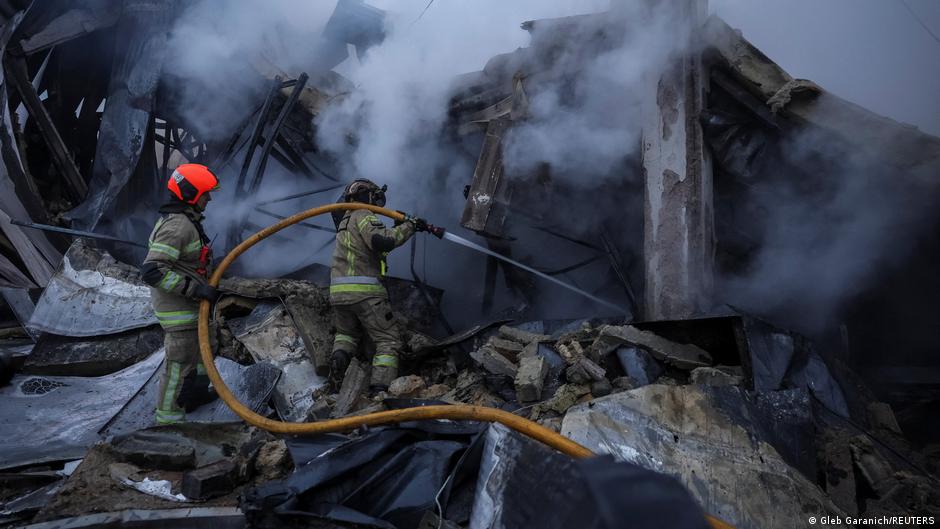
Russian Drone Strike Hits Kharkiv Homes, Injuring Four People
The overnight attack also set a production building ablaze as Ukrainian authorities warned of continuing aerial threats across key regions.
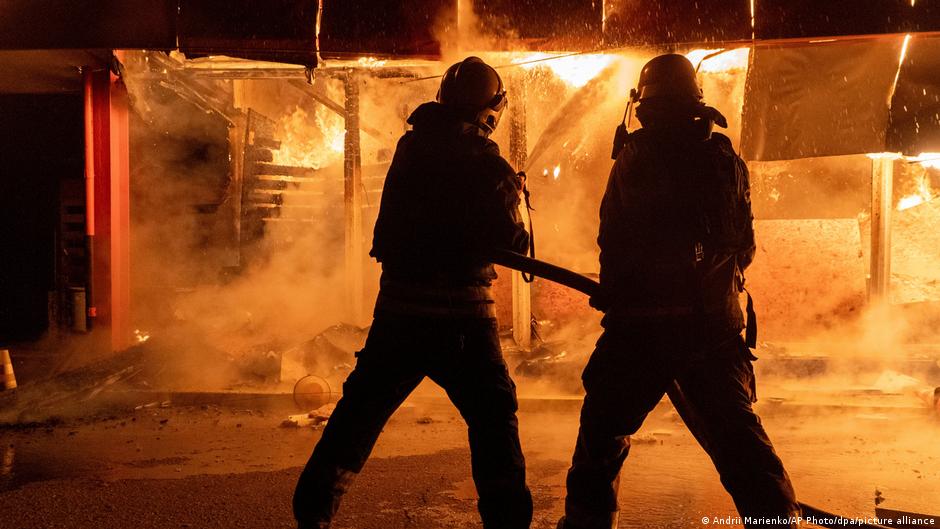
A Russian drone struck a residential building in Kharkiv overnight, injuring four people, including a four-year-old boy, according to Ukrainian regional authorities. The attack also caused fires at residential properties and a two-story production facility in the city’s Osnovianskyi district.
The strike highlights the continuing physical risks facing businesses, households and infrastructure in one of Ukraine’s largest urban economies. Although officials did not report damage to payment networks, banks, telecommunications systems or other digital infrastructure, attacks on residential and production sites can disrupt access to workplaces, commercial services and local financial operations.
Oleh Syniehubov, head of the Kharkiv regional military administration, said Russian forces attacked the city during the night leading into Wednesday, October 28. He reported that a two-story production building, a two-story apartment building and a single-story home caught fire in the Osnovianskyi district.
Syniehubov later identified those injured as women aged 32 and 65, a 56-year-old man and a four-year-old boy. Three of the four required hospitalization, he said.
Residential strike adds pressure on an exposed urban economy
Kharkiv Mayor Ihor Terekhov separately reported that a Russian unmanned aerial vehicle had hit an apartment building. His initial account indicated that people could be trapped inside the structure.
“A hit on an apartment building. According to the available information, people are trapped inside,” Terekhov wrote.
The reported impact on a production building adds an economic dimension to the immediate humanitarian consequences. Authorities did not specify what the facility produced, the scale of the fire or whether operations there had been suspended. No estimate of property damage or business losses was provided.
For Ukraine’s increasingly digital economy, repeated aerial attacks create risks that extend beyond directly damaged sites. Power interruptions, restricted movement and emergency responses can affect merchants’ ability to accept electronic payments, customers’ access to banking applications and companies’ capacity to maintain online services. In this case, however, officials did not announce any outage affecting card payments, digital banks, cryptocurrency services or mobile networks.
The absence of a reported cyber incident is also significant. The attack described by officials was physical, involving drones and fires, rather than a disclosed intrusion into banking or government systems. Still, financial institutions and technology companies operating in areas exposed to strikes generally depend on resilient electricity, communications and data infrastructure to keep services available during emergencies.
Broader aerial alerts extend toward Kyiv and Dnipropetrovsk
During the same period, the Ukrainian Air Force warned of a possible ballistic-weapons threat originating from the direction of Bryansk and heading toward Kyiv. That warning was later withdrawn.
Separate updates published through the Air Force’s Telegram channel said attacks involving jet-powered unmanned aerial vehicles and guided aerial bombs continued toward the Kharkiv and Dnipropetrovsk regions, as well as Kyiv and the surrounding region.
Those alerts covered several areas central to Ukraine’s commercial and technology activity. Kyiv is the country’s main financial and digital-services hub, while Kharkiv and the Dnipropetrovsk region host substantial industrial, engineering and business operations. The reports did not state that banks, fintech companies, cryptocurrency platforms, technology firms or stock-market infrastructure had been directly targeted.
For investors following regional technology and financial assets, the episode reinforces the operational uncertainty created by continuing aerial warfare. The immediate confirmed effects remained localized: four people were injured, three required hospital care, and fires affected a production building and two residential properties in Kharkiv.
Emergency conditions can nevertheless force companies to rely on backup power, distributed workforces and redundant communications. Payment providers and digital banks are particularly dependent on uninterrupted connectivity, while merchants need functioning terminals and mobile networks to process transactions. Cryptocurrency may offer an additional digital transfer channel, but it also requires electricity and internet access; officials gave no indication that crypto services played a role in the response to this attack.
The latest reports therefore point primarily to human casualties and physical damage, rather than a confirmed shock to Ukraine’s financial or technology systems. Yet the continuing use of drones, guided bombs and the threat of ballistic weapons remains a material backdrop for the country’s digital economy, adding security and continuity costs even when core networks remain operational.