Ukraine Proposes National Pantheon and European Order Amid Diplomatic Disputes Impacting Digital Economy
President Zelensky initiates creation of Ukrainian National Pantheon and a new European Order during ongoing tensions with Poland, affecting regional stability and economic cooperation.
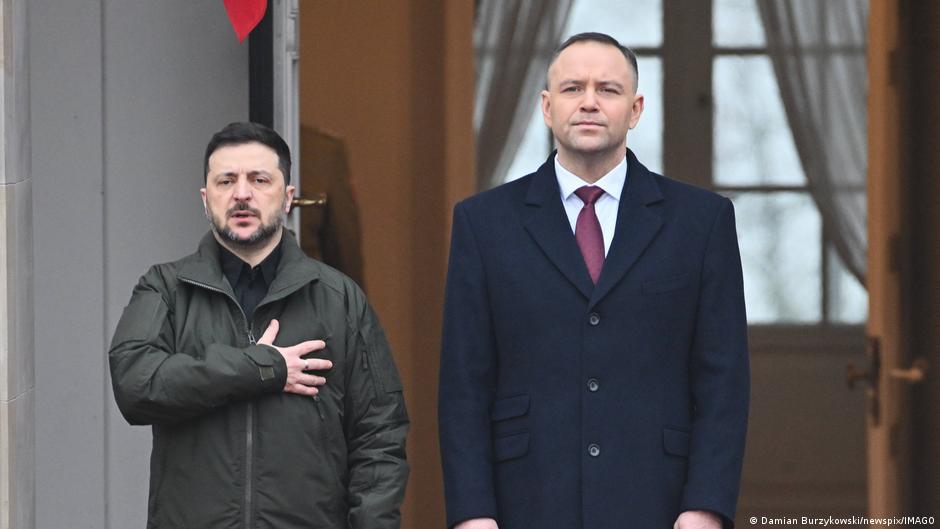
Ukrainian President Volodymyr Zelensky has proposed the establishment of a Ukrainian National Pantheon to honor heroes who have fought for Ukraine across centuries. The announcement was made during a Constitution Day address on June 28, alongside a call to create a new state award, the Order of Europe.
National Recognition and Regional Diplomatic Tensions
The National Pantheon aims to unify the memory of Ukrainian heroes, embedding their legacy within the nation's history with dignity and respect. Zelensky emphasized sovereignty in cultural memory, stating,
"No one will ever tell us how to live, speak, whom to love, who to be grateful to, or which heroes to honor."
These remarks come amid escalating diplomatic tensions between Ukraine and Poland, triggered by Zelensky’s decision to name a Ukrainian military unit after the Ukrainian Insurgent Army (UPA). The UPA is a contentious symbol, particularly in Poland, where it is associated with the tragic Volhynia massacres during World War II, recognized by Warsaw as genocide.
In response, Polish President Karol Nawrocki revoked Ukraine’s highest Polish award, the Order of the White Eagle, from Zelensky. The Ukrainian president's ironic comment on this revocation, contrasting it with awards never withdrawn from historical figures like Catherine the Great and Benito Mussolini, has further strained relations. Polish officials have clarified that such awards are not revoked posthumously and that certain recipients did not commit offenses against the Polish nation.
This diplomatic rift has extended into reciprocal returns of state honors by Ukrainian and Polish politicians, including Jarosław Kaczyński, leader of Poland’s Law and Justice party (PiS), currently in opposition. Kaczyński has called on the Polish government to block Ukraine’s accession talks with the European Union, reflecting a political strategy ahead of parliamentary elections scheduled for October 2027.
Implications for Digital Economy and Regional Cooperation
The deteriorating Ukraine-Poland relations pose risks for economic collaboration, particularly in fintech, digital banking, and technology sectors where cross-border cooperation is essential for regional stability. Poland is a significant EU member with advanced digital infrastructure and financial services, serving as a gateway for Ukrainian fintech innovations and crypto adoption in Europe.
Political instability and diplomatic disputes may hinder joint initiatives in cybersecurity and digital payment systems, crucial areas for mitigating risks from ongoing conflicts and promoting financial inclusion. Ukraine’s push for European integration, symbolized by Zelensky’s proposal of the Order of Europe, intertwines with efforts to modernize its digital economy and align regulatory frameworks with the EU.
Notably, the European Union currently awards the European Order of Merit, established in 2025, distinct from Ukraine’s proposed Order of Europe. Zelensky was among its first recipients, highlighting Ukraine’s aspiration to deepen ties with Europe despite geopolitical challenges.
As Poland remains a key ally in Ukraine’s defense and economic reform, the diplomatic fallout underscores the delicate balance between national memory, political narratives, and regional cooperation. The outcomes will significantly influence investor confidence in tech stocks linked to cybersecurity and digital financial services in the region.
Conclusion
President Zelensky’s initiative to institutionalize Ukrainian heroism through a National Pantheon and new European order represents a symbolic assertion of sovereignty and European integration. However, the accompanying diplomatic friction with Poland illustrates the complex intersection of history, politics, and economic collaboration, with tangible impacts on the evolving fintech landscape and digital economy in Eastern Europe.