Ukraine’s Defense Strategy Shifts Away from NATO Amid Calls for New Security Alliances
Former Ukrainian general asserts Ukraine will not join NATO but seeks access to allied technologies and emerging defense coalitions.
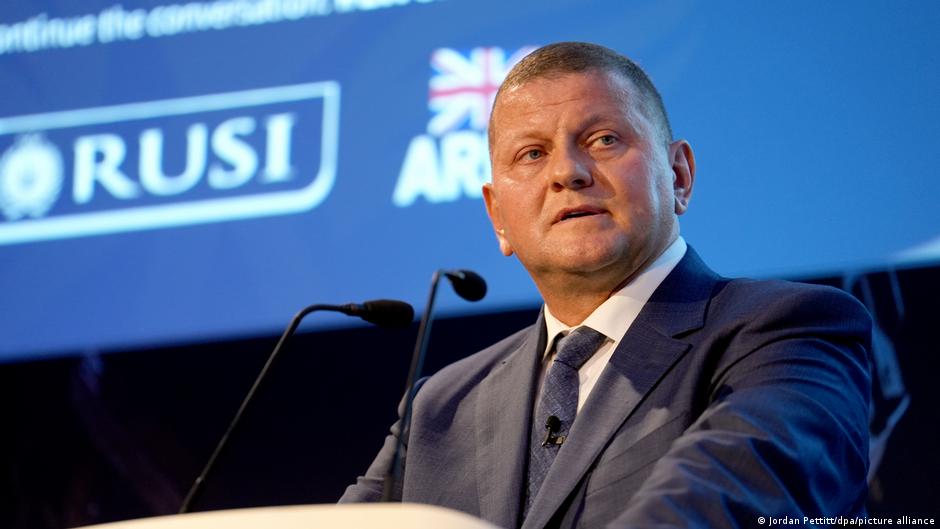
Ukraine is unlikely to join NATO due to fundamental doctrinal differences and the current state of its armed forces, former Chief of the General Staff of the Ukrainian Armed Forces and Ambassador to the UK, General Valeriy Zaluzhnyi, stated recently. Despite this, he emphasized Ukraine’s ongoing need for NATO technologies, particularly in missile defense.
Shifting Security Paradigms
General Zaluzhnyi’s remarks came during a meeting of Ukrainian ambassadors held in Kyiv on August 3. Reflecting on Ukraine’s euro-atlantic integration, he expressed skepticism about the prospect of NATO membership, arguing that the alliance’s doctrines remain anchored in Cold War-era principles that do not align with Ukraine's military development.
“I am very familiar with NATO. For about 12 years, I was personally involved in aligning our armed forces with NATO standards. Every year, I heard stories about imminent membership. Unfortunately, we will never join,” Zaluzhnyi said.
According to Zaluzhnyi, Ukraine’s military needs significant modernization to meet the alliance’s standards. He suggested that it could take another decade or more before Ukraine’s armed forces reach even half the capability of the Russian Federation’s military.
Despite these challenges, Zaluzhnyi acknowledged the vital role NATO technologies continue to play, especially in missile defense. He highlighted Ukraine's reliance on systems such as the American Patriot missile complexes, which are critical for countering ongoing Russian missile attacks amid shortages of compatible munitions.
Emerging Defense Coalitions as Alternatives
As an alternative to NATO membership, Zaluzhnyi advocated for Ukraine’s active participation in emerging regional defense coalitions. One such example is the Joint Expeditionary Force (JEF), a security coalition comprising 10 Northern European countries led by the UK. Ukraine attained extended partner status with the JEF in December 2025.
The JEF coalition includes Denmark, Finland, Estonia, Iceland, Latvia, Lithuania, the Netherlands, Sweden, and Norway, focusing on Northern European security challenges in regions like the Baltic Sea and the Arctic. The coalition cooperates with NATO on maritime deterrence against Russia and has pledged firm measures against Russia’s maritime 'shadow fleet.'
Zaluzhnyi expressed regret that Ukraine has not yet fully integrated into the JEF, noting organizational weaknesses within the coalition’s command structure that impede its suitability for Ukraine’s security needs. Currently, JEF’s framework does not impose collective defense obligations, limiting its potential as a substitute for NATO’s Article 5 security guarantees.
“Ukraine will likely tether itself to new blocks and alliances that will form, probably a European military-security bloc,” Zaluzhnyi predicted, signaling a strategic pivot in Ukraine’s defense partnerships.
Implications for Fintech and Digital Economy
Ukraine’s recalibration of its defense alliances and technology procurement has direct implications for the fintech and digital economy sectors. The country’s pursuit of advanced missile defense and military technologies from NATO allies necessitates robust cybersecurity frameworks to protect sensitive digital military assets and communication networks.
Additionally, the involvement in new multinational coalitions may accelerate the adoption of secure cross-border digital infrastructure and payment systems tailored to defense logistics and financing. This evolution could stimulate growth in Ukrainian tech stocks linked to defense technology, cybersecurity firms, and blockchain-based secure communication platforms.
The realignment away from NATO toward flexible, multi-nation defense frameworks underscores the importance of digital resilience and innovation in Ukraine’s evolving security landscape.