U.S. Strike on Caribbean Boat Highlights Risk Around Illicit Finance Routes
The U.S. military said four people were killed in a strike on a vessel it alleged was carrying drugs in the Caribbean Sea.
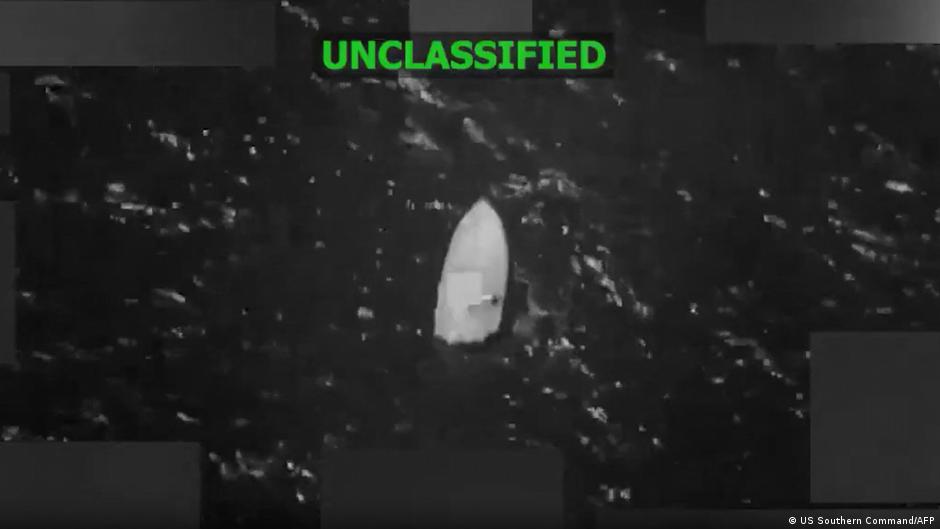
The U.S. military said it carried out a new lethal strike on a speedboat in the Caribbean Sea that it alleged was involved in drug trafficking, killing four people and extending a campaign that has drawn mounting scrutiny from international legal and human rights officials.
U.S. Southern Command reported on Saturday, September 19, that American forces had struck a fast-moving vessel that it said was traveling along routes used for the illegal transport of narcotics in the Caribbean. The command described the action as a “lethal strike” and said the boat was tied to drug trafficking based on intelligence.
“Credible intelligence confirmed this vessel’s involvement in narcotrafficking. During the operation, four narcoterrorists were eliminated,” the military said.
Video released on X showed a moving vessel before it disappeared in a bright flash. The U.S. side did not present evidence proving that the vessel was involved in drug trafficking.
For financial institutions, payments companies and crypto compliance teams, the episode is another reminder that illicit trade routes remain a central concern for sanctions screening, anti-money-laundering controls and transaction-monitoring systems. Although the reported strike was a military operation at sea, the broader enforcement environment surrounding narcotics trafficking often spills into the digital economy through scrutiny of payments flows, cross-border remittances, shell entities, prepaid instruments and crypto-linked transfers.
Illicit Finance Pressure Extends Beyond the Maritime Domain
The Associated Press, cited in the source account, noted that with this latest case, the total number of people killed in U.S. military strikes on vessels of alleged drug traffickers in the Caribbean Sea has reached at least 231. According to the agency’s count, 69 such strikes have been carried out during a campaign that has been under way for more than a year.
Those figures point to a sustained U.S. security campaign rather than an isolated incident. For the financial sector, that matters because narcotics enforcement rarely remains limited to interdiction at sea. Banks, fintech platforms and digital-asset service providers are often expected to identify suspicious patterns that may be linked to trafficking networks, even when the underlying activity takes place far from formal financial centers.
Fintech firms serving cross-border customers can face particular exposure. Digital wallets, instant payment rails and online account-opening processes are designed to move money quickly and reduce friction. Those same strengths can become compliance vulnerabilities when criminal networks attempt to exploit fragmented identity records, mule accounts or rapid layering across multiple platforms.
Crypto companies may also watch the policy signal closely. The article does not allege that digital assets were involved in the Caribbean case, and no such evidence was presented in the source. Still, narcotics trafficking has long been one of the categories cited by regulators when pressing crypto exchanges, stablecoin issuers and wallet providers to strengthen know-your-customer procedures and blockchain analytics. A tougher U.S. posture toward alleged traffickers can therefore reinforce expectations that digital-asset firms demonstrate robust controls.
Legal Scrutiny Creates Policy Uncertainty
The campaign has also become a legal and diplomatic issue. On October 23, 2025, at a White House press conference, U.S. President Donald Trump said American forces would “kill people” bringing drugs into the country from Venezuela. The remark framed the campaign in unusually direct terms and underscored the administration’s willingness to use military force against alleged narcotics traffickers.
On October 31, 2025, Volker Türk, the United Nations High Commissioner for Human Rights, said U.S. attacks on vessels “allegedly linked to drug trafficking” violate international law. Türk called for immediate, independent and transparent investigations into the attacks.
That legal dispute is relevant for investors and technology companies because enforcement actions that sit at the intersection of national security, criminal justice and international law can create unstable compliance expectations. Financial firms may be asked to respond quickly to government designations, intelligence-based alerts or law-enforcement requests, while also managing civil-liberties obligations, due process concerns and reputational risk.
For digital banks and payments platforms, the immediate operational lesson is not that a specific customer segment or corridor has been newly implicated. The source article does not provide names, account details, payment methods or financial intermediaries connected to the struck vessel. Rather, the broader signal is that U.S. authorities continue to treat narcotics trafficking as a high-priority security threat, and firms exposed to cross-border activity may face continued pressure to show that their monitoring systems can detect suspicious behavior.
Technology stocks tied to compliance infrastructure, identity verification, blockchain analytics and cybersecurity could remain sensitive to this regulatory environment. When governments intensify action against transnational crime, demand can rise for tools that help financial institutions screen customers, map networks, identify anomalous transactions and secure data used in investigations. At the same time, companies operating in this space must navigate the reputational risk of building systems used in controversial enforcement contexts.
Cybersecurity also sits close to the issue. Criminal networks that move narcotics or proceeds may rely on encrypted communications, compromised accounts, synthetic identities or stolen credentials. While the source report focuses on a physical vessel and a military strike, financial crime investigations increasingly depend on digital evidence, secure data sharing and resilient systems across banks, fintechs and public agencies.
The latest strike therefore lands in a wider policy debate: how far governments should go in using force against alleged traffickers, what evidence should be disclosed, and how private-sector financial and technology firms should respond when national-security campaigns intersect with payments and digital finance. For now, the known facts are limited: U.S. Southern Command says four people were killed in a strike on a vessel it linked to narcotics trafficking, video of the strike was posted on X, and no proof of the vessel’s alleged trafficking role was publicly presented by the American side.