Russian Strikes Kill Four in Ukraine as Infrastructure Risks Mount
Attacks in Kherson, Sumy, Odesa and the Kyiv region underscored continuing wartime pressure on Ukraine’s urban services and business infrastructure.
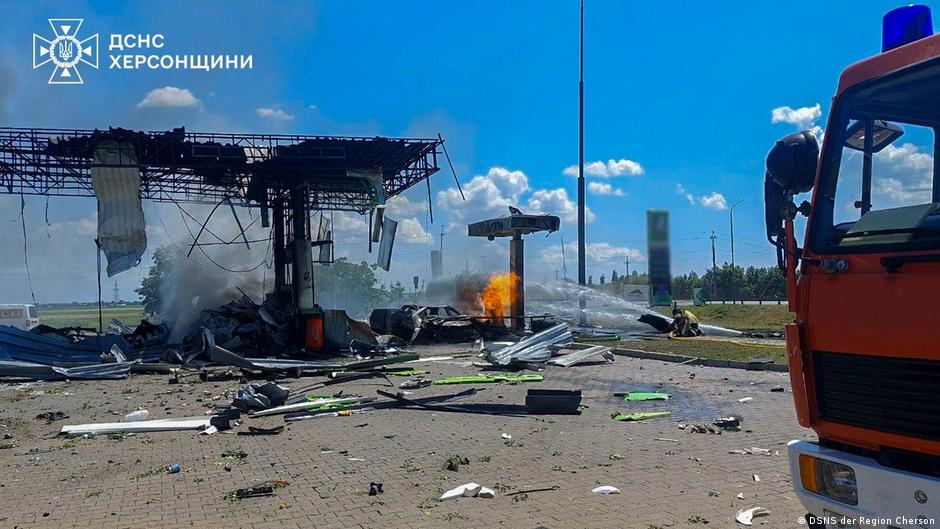
Four people were killed in Ukraine after a new wave of Russian attacks hit several regions, adding to the operational strain on cities, emergency services and the infrastructure that supports daily economic activity. The attacks, reported across Kherson, Sumy, Odesa and the Kyiv region, came on September 18 and into the night of September 19, affecting residential buildings, an administrative facility, a hospital area and warehouse premises.
For Ukraine’s digital economy, the immediate toll remains human and civic. But the pattern of strikes also carries wider implications for payment continuity, digital banking access, cybersecurity readiness and the resilience of technology-enabled services. Repeated attacks on urban buildings, hospitals and warehouses can disrupt local connectivity, logistics, merchant operations and emergency response systems, even where financial infrastructure is not directly named as a target.
In the Kherson region, two people were killed after a Russian drone strike in the settlement of Tekstylne on the evening of Friday, September 18. Oleksandr Prokudin, head of the regional military administration, said the incident occurred at around 6 p.m.
“As a result of the enemy drone strike, two men sustained injuries incompatible with life,” Prokudin wrote on Telegram.
Throughout the evening, Prokudin repeatedly reported air-raid alerts in the region, including warnings linked to possible launches of guided aerial bombs by Russia. Kherson city also saw an attack on one of its hospitals on September 18, when a drone dropped explosives on the grounds of the facility. No casualties were reported in that case.
Urban Attacks Add Pressure on Digital Services
The attacks in southern and northeastern Ukraine are another reminder that wartime risk for the digital economy is not limited to data centers, banks or telecom hubs. Payments, mobile banking, e-commerce and crypto activity all depend on electricity, connectivity, functioning public services and the ability of merchants and households to remain online. Strikes that damage residential blocks, administrative buildings or warehouses can reverberate through these systems by interrupting staff access, delivery chains and local business continuity.
In Odesa region, the State Emergency Service reported the consequences of another Russian attack on September 18. An 11-story administrative building was hit and caught fire. After some time, while emergency services were working at the site, the same building was struck again. Ten people were reported injured, including two rescuers.
The repeat strike on the same building highlights a risk that has become central for public agencies and private operators alike: response windows are themselves vulnerable. For banks, payment processors, technology firms and logistics platforms operating under wartime conditions, incident planning increasingly has to account not only for the first disruption, but also for the possibility that recovery work, staff movement and physical inspections may be exposed to further danger.
Odesa was attacked again during the night of September 19. After an air-raid alert in the city and reports that Russian small missiles were approaching, local residents posted footage on social media showing a fire that had broken out in a residential building within the city. Initial details about that incident were not provided.
In Sumy, Russian strikes hit the city on the evening of September 18. One projectile struck a multi-story residential building, with reports indicating that it was a guided aerial bomb. The blast damaged several apartments and caused part of the building to collapse. According to preliminary information from local authorities, at least two people were killed and seven others were injured.
Residential destruction has direct consequences for digital access. When homes are damaged or evacuated, residents can lose access to devices, identity documents, bank cards, secure authentication tools and reliable internet connections. In an economy where remote services and digital payments have become essential under wartime conditions, each localized strike can create a cluster of exclusion risks: people may need to receive aid, move funds, contact banks or use government services while facing power loss, damaged housing and interrupted communications.
Warehouses and Business Continuity
The Kyiv regional military administration also reported the consequences of Russian strikes on the evening of September 18. Timur Tkachenko, head of the regional administration, said two men were injured in the Bucha district after warehouse premises were hit. Warehouse facilities were also damaged in the Boryspil district of the region.
Damage to warehouse premises is especially relevant for Ukraine’s broader digital and payments ecosystem. Warehouses sit behind retail networks, online marketplaces, delivery apps and business-to-business supply chains. Even when a strike does not target financial institutions directly, disruption to storage and distribution sites can affect merchants’ ability to fulfill orders, process refunds, manage inventories and maintain cash flow. For fintech companies serving small businesses, such shocks can translate into payment delays, credit stress and higher operational risk among clients.
The latest attacks also underscore the overlap between physical security and cybersecurity. Wartime organizations must protect networks from digital intrusion while also preparing for outages, building damage and staff displacement. Banks, payment companies and crypto service providers operating in or serving Ukraine face a dual resilience challenge: defending systems from cyber threats while ensuring that customer access can continue when local infrastructure is hit.
For technology stocks and digital-economy investors, the events point to the continuing risk premium attached to companies with exposure to Ukraine’s operating environment, regional logistics, cybersecurity services or critical infrastructure. The facts reported from Kherson, Odesa, Sumy and the Kyiv region do not identify any direct hit on financial networks or technology firms. Still, the broader pattern of attacks reinforces why investors and operators track not only cyber incidents and sanctions, but also physical strikes that can affect connectivity, emergency response, energy use and commercial continuity.
Ukraine’s wartime digital systems have often been judged by their ability to keep services running under extreme pressure. The latest strikes show the conditions under which that resilience is being tested: drone attacks, guided aerial bombs, missiles, fires, damaged homes, injured emergency workers and disrupted warehouse facilities. The financial technology impact is therefore indirect but material, centered on continuity, access and the capacity of households, merchants and institutions to keep transacting amid repeated attacks.