Merz Says Era of Unconditional Transatlantic Friendship Is Over
Germany’s chancellor framed the rift with Washington as a strategic opening for Berlin to strengthen security, reform and economic resilience.
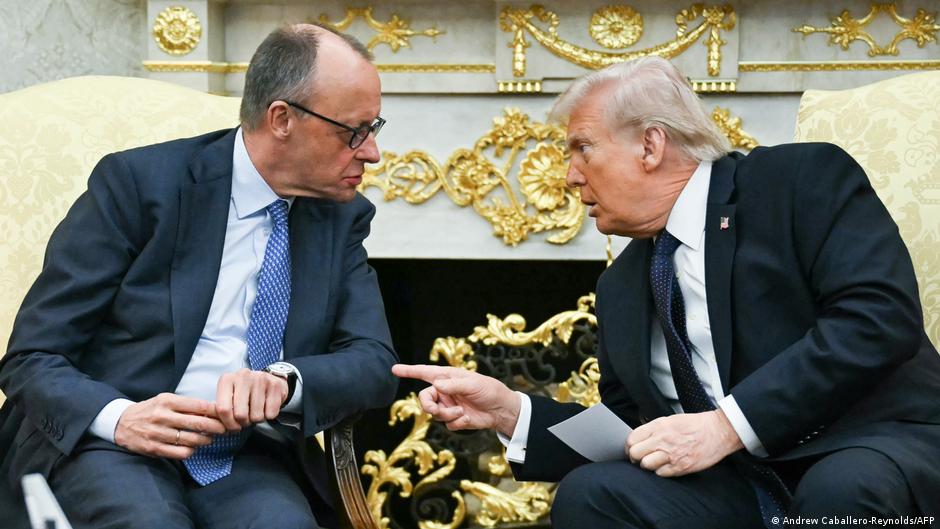
German Chancellor Friedrich Merz has said the period of “unconditional transatlantic friendship” is likely to remain in the past for a long time, pointing to a sharp deterioration in relations between Berlin and Washington under U.S. President Donald Trump. Speaking at a Christian Democratic Union campaign event in Berlin on Thursday, September 17, Merz said Germany was witnessing a fundamental shift across the Atlantic in political approaches and in the assessment of the transatlantic alliance.
The statement came against a backdrop of worsening ties with Trump over disagreements related to the U.S. and Israeli war against Iran, as well as trade wars initiated by the White House. For markets, banks and digital-economy companies, the comments underscore a broader strategic uncertainty: Germany, Europe’s largest economy, is preparing for a more transactional relationship with its most important security partner at a time when trade flows, sanctions policy, shipping routes and defense spending are all feeding into investment decisions.
“We are observing on the other side of the Atlantic a change in political approaches and in the assessment of the transatlantic alliance that we perhaps could not have imagined,” Merz said, according to dpa.
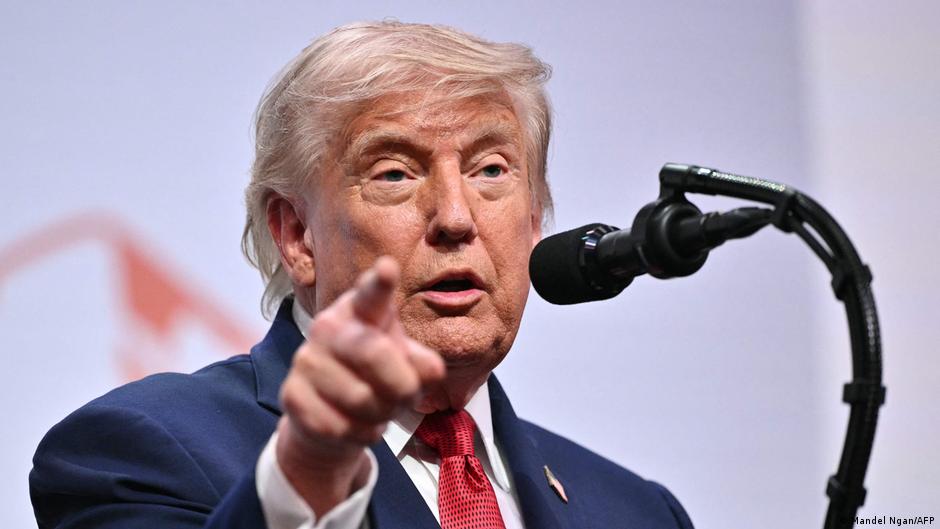
Trump initially took a favorable view of Merz at the start of his second presidential term. Relations worsened after Merz refused to support the United States in the war with Iran. Trump then began criticizing German authorities, including by attributing false statements to Merz.
Earlier in September, Trump congratulated the far-right Alternative for Germany party on its victory in state elections in Saxony-Anhalt. That was seen in Berlin as another gesture of support from Washington for German right-wing populists, a pattern that had already drawn criticism from German officials.
Digital economy faces geopolitical spillovers
Although Merz’s remarks were primarily diplomatic and political, the implications extend into the financial and technology sectors. Germany’s digital economy depends heavily on stable trade relations, predictable sanctions regimes and secure cross-border infrastructure. A colder U.S.-Germany relationship could affect the operating environment for payment networks, fintech firms, cloud providers, cybersecurity vendors and banks with exposure to transatlantic data and capital flows.
The trade wars launched by Trump are especially relevant for technology stocks and digital banking. Tariffs and retaliatory measures can increase costs for hardware, semiconductors, enterprise technology and payment infrastructure. They can also reduce business confidence and slow corporate investment in digital transformation. For listed technology companies and fintech platforms, political frictions between Washington and Berlin may become another variable for investors already tracking interest rates, regulation and earnings growth.
The war in Iran and its consequences for shipping in the Strait of Hormuz and the Red Sea add a second layer of risk. German government spokesman Stefan Kornelius later said that Merz and Trump had held a phone call that Berlin had previously postponed. According to Kornelius, Merz discussed with Trump the next steps toward ending Russia’s war against Ukraine, welcomed the U.S. Congress’s adoption of a sanctions package against Russia initiated by Senator Lindsey Graham, and addressed shipping problems in the Strait of Hormuz and the Red Sea caused by the war in Iran.
Those shipping disruptions matter for the digital economy because payment systems, insurers, trade-finance banks and treasury platforms are tied to global commerce. Higher logistics costs and route uncertainty can feed into inflation expectations, corporate margins and risk models. Sanctions policy also shapes compliance burdens for banks, crypto exchanges and payment processors, which must screen transactions and customers across jurisdictions that may not always move in lockstep.
Berlin sees opportunity in strategic autonomy
Merz also argued that the tensions emerging between Europe, including Germany, and the United States create opportunities that should not be missed. Germany, he said, must seize the moment and assume more responsibility for its own security and development. He pointed in particular to the federal government’s significant increase in defense spending.
For the fintech and tech-stock universe, higher defense spending can redirect public budgets and private capital toward cybersecurity, secure communications, artificial intelligence, identity systems and resilient cloud infrastructure. Germany’s push to take greater responsibility for security may strengthen demand for domestic and European technology suppliers, including firms involved in fraud prevention, encrypted data services and digital public infrastructure. At the same time, a more security-focused economic agenda could bring tighter scrutiny of foreign technology providers and cross-border data dependencies.
Merz said he sees signs of economic recovery in Germany after several years of stagnation. He noted forecasts that the country’s economy is expected to grow by about 1.3 percent in 2026. “We have come out of this valley of a shrinking or stagnating economy,” he said, while adding that Germany still needs reforms.
That growth estimate is modest, but for digital banking, payments and enterprise software companies it could mark a shift from defensive positioning to selective expansion. A recovering German economy would support consumer spending, business lending, card volumes and investment in automation. However, Merz’s insistence that reforms remain necessary signals that the recovery is not yet self-sustaining.
The postponed phone call between Merz and Trump also carried symbolic weight. It had originally been planned around the anniversary of the September 11, 2001 terrorist attacks, which Merz recalled during the conversation. Berlin had delayed the call one day before it was due to take place, without giving reasons.
The delay followed Trump’s praise for the far-right Alternative for Germany after its decisive victory in the Saxony-Anhalt state parliament election. Berlin reacted with irritation. Metin Hakverdi, the German government’s coordinator for transatlantic cooperation, said Germans were capable of deciding for themselves how to address migration and whom to elect. “We do not need advice from the White House on this,” he said.
For financial markets, the message from Berlin is clear: Germany is preparing for a world in which the U.S. alliance remains important but no longer unconditional. That recalibration could shape defense budgets, sanctions enforcement, trade policy and digital sovereignty efforts. For fintech, crypto and technology investors, the political rift is not just a diplomatic story. It is part of the operating environment for the next phase of Europe’s digital economy.