U.S. Strike on Gulf Vessel Raises New Risks for Payments and Energy Markets
CENTCOM says a precision strike disabled a Panama-flagged cargo ship as renewed Gulf tensions add pressure across fuel, trade and digital finance.
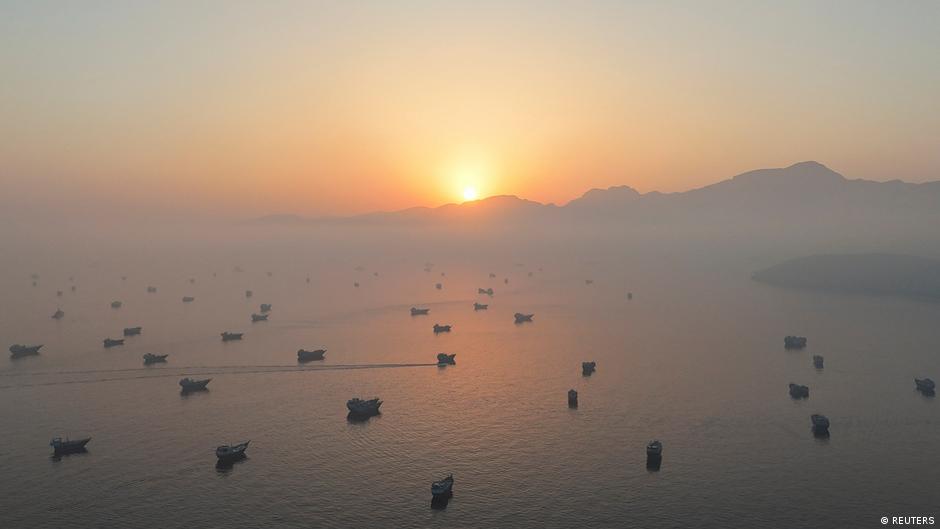
A U.S. Air Force fighter jet has disabled a commercial cargo vessel in the Gulf of Oman, according to U.S. Central Command, in an incident that adds another layer of risk to energy markets, trade finance, digital banking operations and the broader technology sector’s exposure to geopolitical shocks.
CENTCOM said on October 10 that its forces struck the stern of the M/V Ocean Molica, also known as the Arika Sun, after the crew allegedly ignored repeated warnings and attempted to breach an active maritime blockade against Iran. The Panama-flagged vessel had previously departed from an Iranian port, according to the command.
The strike was carried out with a precision-guided munition and fully disabled the ship’s propulsion system, CENTCOM said. The command said the crew was not injured. The incident came as a tanker was separately hit by fire in the Strait of Hormuz, according to the United Kingdom Maritime Trade Operations organization.
Crews have been advised to heed warnings related to the blockade, according to the U.S. command.
Energy Security Becomes a Digital Economy Issue
For financial markets, the immediate concern is not only the operational disruption to shipping, but the way Gulf instability can ripple through the payment systems, credit lines and technology platforms that support global commodities trade. Any escalation around Iranian ports or the Strait of Hormuz can complicate settlement flows, insurance coverage, sanctions screening and risk models used by banks and fintech firms.
CENTCOM said U.S. forces resumed a blockade on July 14 covering all vessels traveling to or from Iranian ports. Over the past three months, four commercial vessels have been disabled, 135 ships have been forced to turn around and alter course, and U.S. forces have destroyed 10 tankers linked to the shadow network of Iran’s Islamic Revolutionary Guard Corps, according to the command.
Those figures point to sustained pressure on maritime logistics rather than an isolated enforcement action. For digital banks and payment processors that serve importers, exporters and energy-linked clients, that pressure can translate into higher compliance workloads and more complex transaction monitoring. Payments tied to cargoes, vessel operators, insurers and intermediaries may require additional screening, particularly when routes, flags, beneficial ownership and port calls intersect with sanctioned or politically sensitive jurisdictions.
The disruption also matters for crypto markets, where geopolitical stress often influences liquidity, stablecoin flows and risk appetite. While the source report does not link the Gulf incidents directly to digital assets, the broader market mechanics are familiar: higher fuel costs, uncertainty over shipping lanes and the possibility of new sanctions can push traders and institutions to reassess exposure across volatile assets, including tokens and tech equities.
Hormuz Incident Adds to Shipping Risk
UKMTO reported that a tanker in the Strait of Hormuz was again subjected to fire. According to the captain, the vessel was hit on its port side by an unknown projectile, causing a fire. UKMTO said the crew was safe.
The Strait of Hormuz remains a critical chokepoint for energy flows and a focal point for financial infrastructure tied to global trade. When vessels are damaged or diverted, the consequences extend beyond shipping companies. Banks financing cargoes may need to reassess documentation timelines, insurers may revise premiums, and payment platforms may face delays or enhanced due diligence requests connected to trade settlement.
Such shocks can also affect corporate treasury operations. Energy importers and logistics firms may seek to hedge currency and commodity exposure more aggressively. Digital banking platforms that serve small and midsize businesses could see clients facing higher fuel bills, longer delivery schedules and tighter working-capital needs. For fintech lenders, the risk is that cost inflation and supply-chain disruption weaken borrower profiles in sectors tied to transport, manufacturing and retail distribution.
G7 Pressure and Market Sensitivity
The latest incidents follow a G7 statement on October 2 condemning continuing Iranian attacks on neighboring countries, as well as actions that violate international trade, energy security and the global economy. The G7 leaders called for the immediate and full restoration of the rights and principles of navigation in the Strait of Hormuz and said they intended to strengthen collective efforts to achieve that goal.
That diplomatic backdrop matters to investors because it signals the possibility of further coordinated measures. For banks, fintechs and crypto platforms, any tightening of restrictions or enforcement priorities can create immediate operational demands. Sanctions compliance systems may need to process new watchlist data, transaction rules may need updating, and customer reviews may become more intensive for trade-linked entities.
Technology stocks can also be sensitive to this kind of geopolitical pressure. Higher fuel prices may feed inflation concerns, influence interest-rate expectations and weigh on growth companies whose valuations depend heavily on future earnings. Cybersecurity firms, by contrast, can attract greater attention when geopolitical risk rises, particularly if governments and critical infrastructure operators prepare for possible retaliation or disruption in digital networks.
The source report said fuel prices have risen significantly in recent weeks against the backdrop of the war with Iran. That increase has intensified pressure on Republicans roughly one month before the U.S. congressional midterm elections, where recent polls indicate their popularity among voters has declined.
For the digital economy, the central issue is that maritime security is now deeply connected to financial technology infrastructure. A disabled cargo ship in the Gulf of Oman can affect far more than a shipping route. It can influence payment corridors, sanctions screening, digital banking risk controls, fuel-linked inflation expectations, crypto market sentiment and the performance of technology shares exposed to global macro volatility.