German BSW Lawmaker Plans Belarus and Russia Trips as Local Ties Reopen
Sven Hornauf says delegations will seek to restore sister-city contacts, a move watched against Germany’s wider digital and security economy.
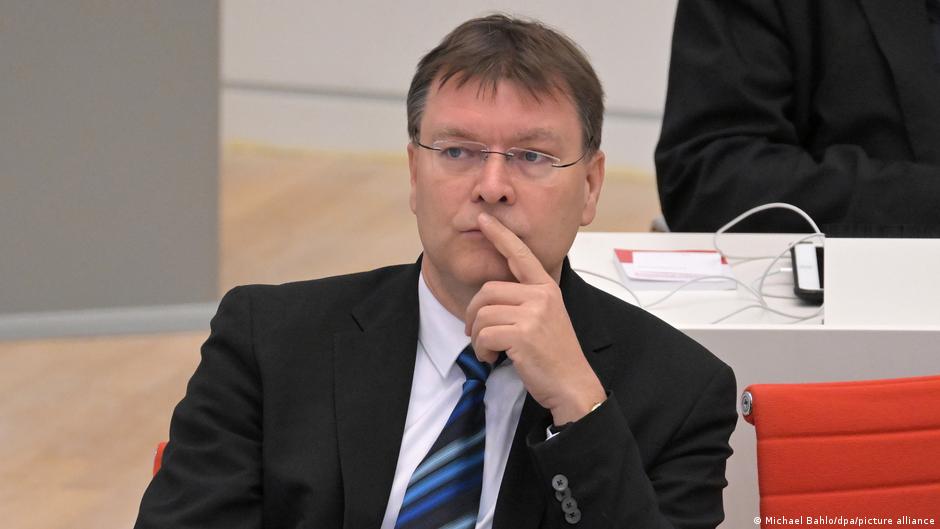
A lawmaker from Germany’s left-populist BSW party has announced plans to bring a delegation of German politicians and civil-society representatives to Belarus and later to Russia, saying the visits are intended to restore contacts between sister cities. The initiative is political in form, but for Germany’s digital economy it lands in a wider context shaped by sanctions, cyber risk, cross-border payments restrictions and the long-running debate over how local institutions should engage with Russia and Belarus after Moscow’s full-scale invasion of Ukraine.
Sven Hornauf, a member of the Brandenburg state parliament from the Alliance for Social Justice and Sensible Economy, known as BSW and formerly associated with Sahra Wagenknecht, said he plans to travel by bus to Vitebsk in November with like-minded delegates from various German parties. Hornauf made the comments in an interview with the regional newspaper Märkische Oderzeitung on Saturday, October 3. The following day, larger German media outlets, including dpa, Tagesspiegel and Die Welt, reported on the plans.
Hornauf said his objective is to resume cooperation between German cities and their counterparts in Belarus and Russia in order to send what he described as a signal in favor of understanding between peoples. He is also planning a visit to Russia in April 2027. In his view, it is important to restore normal, regular contacts directly between people and to ensure that the broader political climate, from whatever side, does not prevent such links.
Hornauf said the aim was to send a signal in favor of mutual understanding between peoples.
The plan comes as European municipalities, banks, technology providers and public-sector operators continue to navigate a highly constrained environment for any engagement involving Russia and Belarus. Since 2022, relations have been reshaped not only by diplomacy and sanctions, but also by practical questions around payments, compliance screening, digital identity, cybersecurity exposure and the risk that seemingly local channels can acquire geopolitical significance.
Payments and compliance risks frame local diplomacy
According to Hornauf, between 30 and 40 people are expected to take part in the organized trip to Belarus, most of whom do not belong to any political party. At the same time, he named several BSW members among the participants, as well as representatives of the Greens and the far-right Alternative for Germany, or AfD. Hornauf said the final composition of the delegation will be determined during preparatory meetings.
Hornauf said the delegation from his home city of Frankfurt an der Oder will visit Vitebsk from November 6 to November 11. Other participants in the trip intend to travel to Minsk and several other Belarusian sister cities. In each case, the stated reason for the visit is a desire to restore sister-city relations.
For municipal administrations and the companies that support them, renewed cross-border contacts can raise operational questions even when no commercial transaction is announced. Travel, events and institutional exchanges may involve booking systems, bank transfers, insurance, communications platforms, cloud services and data handling. In the current environment, those services are often filtered through sanctions compliance, anti-money-laundering controls and cybersecurity policies. The source article does not say that Hornauf’s initiative includes any financial or technology agreements, but the political signal itself sits inside a digital economy increasingly shaped by security checks and risk management.
Many sister-city relationships between German, Belarusian and Russian municipalities were suspended after Russia’s full-scale invasion of Ukraine. However, a 2026 survey by the media group Redaktionsnetzwerk Deutschland among around 100 German cities and communities found that only one had fully terminated its partnership with a Russian sister city.
RND also reported that informal contacts with Russia, including invitations for representatives of Russian cities to visit Germany, continued after 2022 in about 40 percent of the municipalities surveyed. In 42 percent of respondent municipalities in Germany, officials supported resuming partnership with Russia in the event of a peaceful settlement in Ukraine.
Cybersecurity and tech-sector optics
The figures underscore a distinction that matters for the financial and technology sectors: formal political distancing does not always mean a complete end to local networks. For banks, payment firms, cybersecurity vendors and public-sector technology contractors, that distinction can be material. Informal municipal contact may not create direct exposure by itself, but it can prompt institutions to review counterparties, communication channels, event financing and the handling of personal data linked to delegations.
The optics are also relevant for tech stocks and digital infrastructure companies operating in Germany and across Europe. Defense technology, cybersecurity and compliance software providers have benefited from an environment in which governments and businesses are spending more on resilience, screening and secure communications. Political initiatives that question or soften parts of the post-2022 isolation framework can become part of the broader debate over how long elevated security spending should continue and how public institutions should calibrate engagement.
Hornauf has already drawn media attention over Russia-related outreach. In spring 2026, he became one of the initiators of a visit by BSW members and supporters to the Russian embassy in Berlin. He had previously been criticized for supporting several AfD initiatives.
He has also criticized Germany’s moves to strengthen defense in response to Russia’s aggressive policy. In particular, Hornauf opposed the deployment of the U.S.-Israeli Arrow 3 missile-defense system at the Bundeswehr base in Holzdorf. The missile-defense system entered operational duty in Germany at the end of 2025.
That background gives the planned Belarus and Russia trips a sharper policy profile. For supporters, the visits are framed as people-to-people diplomacy at a municipal level. For critics, any reopening of channels with Belarusian and Russian institutions risks blurring the political boundaries established after the invasion of Ukraine. For the digital economy, the practical takeaway is narrower but important: even non-commercial contacts can travel through payment rails, communications networks, identity systems and data platforms that now operate under heightened geopolitical scrutiny.
Hornauf’s initiative remains, as described, a political and civil-society delegation. No financial partnership, digital banking arrangement, cryptocurrency project or technology investment is reported in the source article. Still, the planned route from Frankfurt an der Oder to Vitebsk, and the proposed Russia visit in April 2027, show how local diplomacy can intersect with the infrastructure of the modern economy. In Europe’s current security environment, the channels that connect cities are no longer only ceremonial; they are also compliance, payments and cybersecurity questions waiting to be assessed.