Swiss Voters Reject Neutrality Curbs That Could Have Limited Sanctions
The referendum result preserves Bern’s ability to align with EU sanctions, a policy relevant to banks, payments firms and crypto compliance teams.
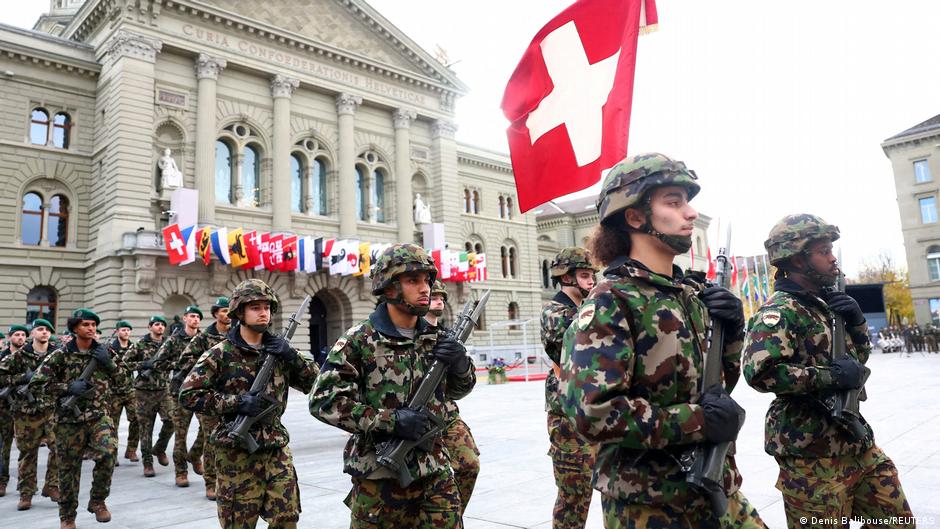
Swiss voters have rejected a proposal that would have imposed a stricter constitutional interpretation of the country’s neutrality and sharply limited the government’s ability to join sanctions against states at war. The result preserves Switzerland’s current room for maneuver on foreign policy, including its ability to align with European Union sanctions against Russia over the war in Ukraine.
According to official results published on the Swiss government’s website on Sunday, September 27, 70.15 percent of voters opposed the initiative. The measure had been promoted by the association “For Switzerland” (Pro Schweiz), a group close to the right-conservative Swiss People’s Party, under the title “Preserving Swiss Neutrality.”
The proposal argued that although neutrality is enshrined in Switzerland’s Constitution, the government had weakened the principle of non-intervention by joining EU sanctions against Russia in connection with the war in Ukraine. Its supporters sought to write into the Constitution a principle of “permanent and armed” neutrality and to restrict Switzerland’s cooperation with military alliances such as NATO, except in cases where Switzerland itself came under attack.
For financial markets and the digital economy, the most consequential element was the initiative’s sanctions clause. Had the measure passed, the government would have been able to introduce economic sanctions only after approval by the United Nations Security Council. That would have represented a major shift for Swiss banks, payment processors, wealth managers, trading firms, crypto platforms and technology companies that operate across jurisdictions and rely on clear sanctions alignment with major Western markets.
Compliance Continuity for Finance and Crypto
Switzerland’s decision matters because the country remains a significant hub for banking, asset management, commodities finance, blockchain companies and cross-border payment infrastructure. Sanctions policy is not only a diplomatic tool; it is embedded in account screening, transaction monitoring, onboarding checks, risk scoring and the automated compliance systems used by financial institutions and fintech firms.
By rejecting the initiative, voters left intact the government’s ability to adopt sanctions that are not necessarily tied to a UN Security Council mandate. In practical terms, that reduces the risk of a sudden divergence between Swiss rules and EU measures, particularly in areas where financial institutions must monitor sanctioned persons, entities, securities, wallets, payment flows and trade finance exposure.
For digital banking platforms and payments companies, fragmented sanctions regimes can create operational friction. Firms must determine whether a customer, counterparty, transaction route or beneficial owner is subject to restrictions. If Switzerland had been constitutionally barred from adopting sanctions without UN approval, institutions with Swiss operations could have faced a more complex compliance environment, especially where EU, U.S. or U.K. rules applied to counterparties while Swiss rules did not mirror them.
Crypto businesses would also have watched the vote closely. Switzerland has cultivated a reputation as a blockchain-friendly jurisdiction, including through its digital asset ecosystem. At the same time, crypto exchanges, custody providers and token issuers face growing pressure to demonstrate that they can identify sanctions risk and prevent restricted actors from using digital assets to move value. A tighter constitutional limit on sanctions could have complicated the policy backdrop for those firms, even if private companies continued to follow broader international standards.
Foreign Minister Ignazio Cassis argued during a televised debate that Swiss neutrality has always been applied with a degree of “flexibility.”
Cassis also said neutrality should not be equated with “indifference.” In his view, Switzerland should not close its eyes to violations of international law in order to protect its own interests or preserve peace. That framing was central to the campaign against the proposal: neutrality, opponents argued, does not require Switzerland to remain passive when international law is violated.
Political Signal to Markets
All major political forces in Switzerland except the Swiss People’s Party opposed the initiative. The scale of the rejection indicates that voters were unwilling to transform neutrality into a much more rigid constitutional doctrine. For investors and compliance officers, the result signals continuity rather than a turn toward legal isolation in sanctions policy.
The vote also carries implications for technology stocks and digital-economy firms with Swiss exposure. Sanctions regimes can affect software exporters, cybersecurity vendors, cloud providers, chip-related supply chains and digital service companies. When governments impose restrictions, businesses may need to block accounts, terminate service, halt deliveries, freeze assets or strengthen screening of corporate clients. A Swiss framework that remains aligned with European sanctions practice reduces one source of uncertainty for companies that must manage geopolitical risk through automated controls and legal workflows.
Cybersecurity is another part of the equation. Sanctions related to war and international law often overlap with concerns about state-linked actors, cyber operations, illicit finance and infrastructure risk. While the referendum was about neutrality, not cyber policy, its sanctions provisions would have affected the broader toolkit available to the Swiss government in responding to geopolitical threats with economic measures.
The referendum took place alongside another vote on food security. More than 70 percent of Swiss voters also rejected an initiative whose supporters wanted to raise the share of domestically produced food to at least 70 percent of consumption, increase production of plant-based foods, reduce the use of plant protection products and fertilizers, and strengthen protection for drinking water, soil fertility and biodiversity.
Taken together, the results show Swiss voters rejecting two initiatives that would have required substantial policy changes through constitutional or legal constraints. For the financial and technology sectors, however, the neutrality vote was the one with the clearer immediate relevance. It leaves Bern able to continue using sanctions policy with the flexibility that officials say has long characterized Swiss neutrality, while banks, payment networks, crypto firms and digital service providers avoid a potentially sharp divergence from European compliance practice.