Trump Plans Putin Call as WHO Seeks Details on Possible Plague Case in Russia
The reports from Irkutsk add a public-health risk variable for markets already sensitive to geopolitical tension, supply chains and cyber resilience.
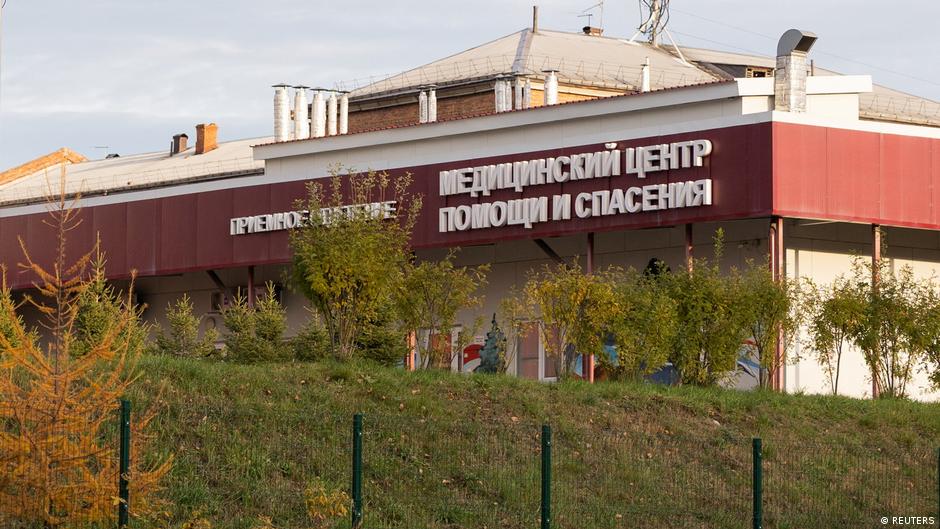
U.S. President Donald Trump plans to speak by telephone with Russian President Vladimir Putin after reports of the possible death of a 28-year-old laboratory assistant at the Irkutsk Anti-Plague Institute from plague, while the World Health Organization has asked Russia for additional information about the pathogen that prompted public-health measures.
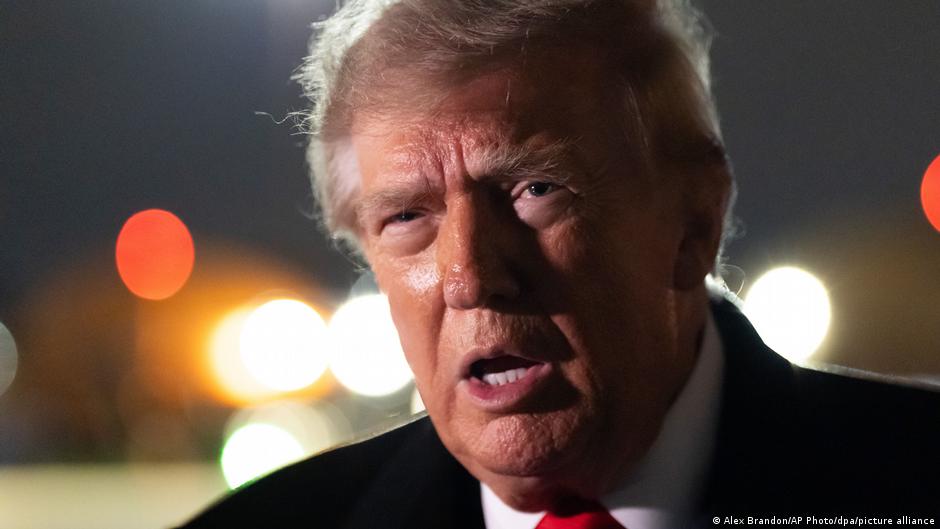
The White House said on Tuesday, October 6, that the two leaders had a call scheduled soon. Trump made the comment in response to a journalist’s question about whether he had discussed the situation in Irkutsk with Putin. The episode has quickly become more than a regional public-health story: for investors and executives in payments, digital banking, cybersecurity and technology stocks, any uncertainty involving a high-risk pathogen can affect risk models, cross-border commerce, workplace continuity and the resilience of digital infrastructure.
The WHO is in contact with Russian health authorities and has offered technical support, WHO Director-General Tedros Adhanom Ghebreyesus wrote on X late on October 7. He said Russian health authorities had informed the organization, in response to its request, that no plague cases had recently been registered in the Irkutsk region.
Russian authorities told the WHO that an epidemiological investigation had been conducted, preventive and control measures had been taken, and identified contacts had been placed under medical observation and tested.
According to Ghebreyesus, Russian authorities also reported that no high-threat pathogens were found among the contacts and that medical observation of all identified contacts had been completed. In the same post, however, the WHO chief said the organization had requested additional information to clarify the cause of severe pneumonia, the pathogen that led to the public-health measures, and media reports about a second employee with pneumonia of unknown origin.
Market Sensitivity Beyond Public Health
For FinPulse readers, the financial-market relevance lies in the way health scares now move through digital systems almost immediately. Payment processors, banks and trading platforms tend to react not only to confirmed epidemiological facts, but also to uncertainty: regional quarantines, workplace restrictions, border controls, misinformation spikes and shifts in consumer behavior can all show up in transaction data, staffing models and risk dashboards before official narratives are settled.
Russia’s digital economy remains closely watched because of its role in energy, metals, cybersecurity, sanctions exposure and cross-border technology dependencies. The source reports that the Irkutsk aluminium plant, known as IrkAZ, in Shelekhov introduced a mask regime, according to plant director Artem Fominykh a day earlier. Even limited local safety measures can be significant for companies monitoring industrial output, commodities logistics and supply-chain finance, particularly when a site is connected to metals production.
The reports also come at a time when financial institutions increasingly rely on real-time signals to manage operational risk. Digital banks, payment firms and crypto platforms have learned since the pandemic that public-health events can trigger rapid changes in online activity: more remote banking, higher digital payments volume, heavier fraud attempts, increased phishing campaigns and renewed demand for secure identity verification. None of those developments is confirmed in this case, but the possibility explains why the story is being watched beyond medical circles.
Trump had said on October 5 that the United States was “watching very closely” what was happening in Russia. In response to a journalist’s question about whether the White House would react to the reports from Russia, he said the United States had only just heard about it and that Russian authorities were calling it pneumonia. He added that pneumonia had previously been easier to treat, but that microbes and bacteria had become disproportionately stronger, and said the United States would help Russia.
The local facts remain contested and incomplete. In Shelekhov District Hospital in the Irkutsk region, 28-year-old laboratory assistant Darya Shipilova died during the night of October 2. Alexey Tsydenov, the head of neighboring Buryatia, initially wrote on Max that the cause of death was plague. He later edited the post, adding the word “possibly.”
Rospotrebnadzor said the deceased had been diagnosed with pneumonia of unknown cause. Igor Kobzev, the governor of the Irkutsk region, reported suspicion of an “especially dangerous infection” but did not name the presumed diagnosis. The publication Lyudi Baikala reported on October 4 that Irkutsk city clinical hospitals No. 1, 3 and 10, as well as a maternity hospital and the Ivano-Matreninskaya Children’s Clinical Hospital, had been closed for quarantine.
Digital Infrastructure and Information Risk
The WHO’s request for additional information is especially relevant to the financial and technology sectors because uncertainty itself can become a market factor. When official statements, regional reports and media accounts do not fully align, banks and technology firms typically face a second-order challenge: separating verified risk from rumor at speed. Cybersecurity teams may also need to monitor whether attackers use public-health concern as a pretext for credential theft, fake alerts or fraudulent donation and procurement campaigns.
Tech stocks can be exposed in several ways. Companies linked to cloud services, remote work, online payments, cybersecurity and digital identity may see attention if restrictions expand, while industrial and logistics-linked technology firms may face concern if production sites or transport networks are affected. Crypto markets, which often trade around geopolitical anxiety and liquidity shifts, may also react to headlines even when the underlying health risk remains unconfirmed.
For now, the central development is diplomatic and informational rather than financial: Trump says he intends to speak with Putin, the WHO says it is in contact with Russian health authorities, and Russia has told the WHO that no plague cases have recently been registered in the Irkutsk region. The open question is whether additional information will clarify the cause of Shipilova’s severe illness and the pathogen behind the public-health response.