Trump Says Putin More Interested Than Zelensky in Ukraine Peace Deal
The U.S. president’s comments on an energy ceasefire dispute add uncertainty for markets tracking war risk, infrastructure damage and regional digital resilience.
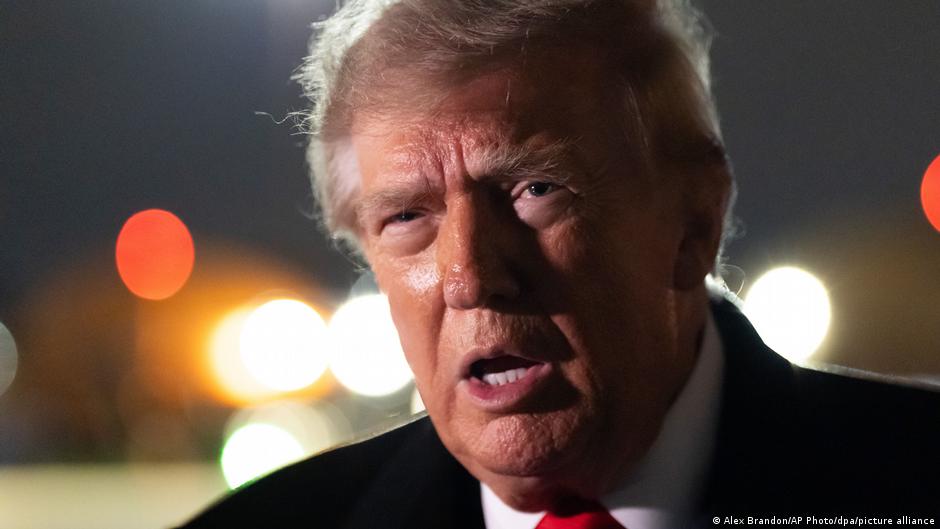
U.S. President Donald Trump said Russian President Vladimir Putin is more interested than Ukrainian President Vladimir Zelensky in reaching a peace agreement over Ukraine, while also arguing that alleged violations of an energy ceasefire had occurred on both sides. The remarks, made in response to journalists’ questions late Monday night into Tuesday, October 13, place Washington’s assessment of the conflict’s diplomacy back at the center of geopolitical risk calculations for investors, lenders, payment firms and technology companies exposed to Eastern Europe.
Asked how he could see Putin as ready for compromise while Russia continued to attack Ukraine, Trump said he believed the sides would ultimately reach an agreement. “I think they’ll make a deal. I really think Putin is more interested than Zelensky in making a deal,” Trump said, according to the source article.
The comments came as the latest dispute focused on an energy-sector ceasefire that Trump himself had previously announced. Ukrainian officials have said Russia has not complied with the arrangement, while Trump suggested the matter required further review. “First we need to study this situation, because there were violations on both sides,” he said when asked about Putin’s alleged breach of the energy truce.
Energy Infrastructure Remains a Market Risk
For FinPulse readers, the significance of the exchange extends beyond battlefield diplomacy. Ukraine’s energy infrastructure is a key input for the country’s digital economy, including payment processing, digital banking availability, data-center reliability, cybersecurity operations and the resilience of telecom networks. Fresh uncertainty around an energy ceasefire raises questions for financial institutions and technology providers that depend on stable electricity, backup connectivity and cross-border operational continuity.
Energy attacks also feed into broader market pricing of war risk. Banks, insurers, fintech firms, payment processors and software vendors operating in or near Ukraine have had to treat power disruption as an operational variable. Even when core financial systems remain online, damage to electricity generation and distribution can affect branches, merchant acquiring, ATM networks, customer support centers and the ability of businesses to accept digital payments.
According to the Russian-language source, Trump was pressed on how he intended to secure Russian compliance with the energy ceasefire. He replied that, in his view, Putin wanted an agreement and that the person who needed to be persuaded to move toward it was Zelensky.
“We are waiting to see what concrete steps the Americans are ready to take,” Zelensky said in remarks at the Warsaw Security Forum.
Zelensky had earlier called on the United States to influence Russia so that Moscow would begin observing the ceasefire regime in the energy sector. His statement underscored Kyiv’s view that Washington’s leverage is central to whether de-escalation can become practical rather than declarative.
Kyiv Says It Backed the Ceasefire
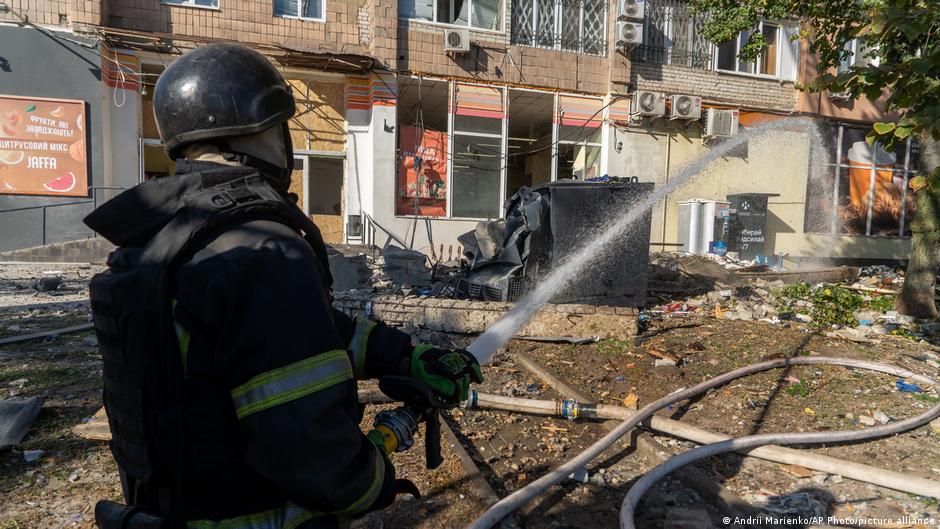
The Ukrainian president said Kyiv was very surprised on October 11 by social media reports that all attacks on energy facilities in Russia’s war against Ukraine would immediately stop. Shortly after that announcement was published, Russia struck a thermal power plant in Kharkiv, causing additional damage to Ukraine’s energy system, Zelensky recalled.
That sequence matters for financial and technology stakeholders because ceasefire credibility is as important as ceasefire language. A declared halt to attacks on energy infrastructure can reduce immediate operational concerns for businesses only if it is observed and verifiable. If attacks continue after public announcements, companies must keep planning around disruption, redundancy and emergency procedures rather than assuming a lower-risk environment.
On the evening of October 12, Zelensky wrote on Telegram that Ukraine supported an energy ceasefire. He said the position was “absolutely clear”: Ukraine was ready to guarantee an energy ceasefire as announced by the U.S. president, and Russia had to take corresponding steps. He added that, at that moment, there was no recorded implementation by Russia of the conditions stated by the U.S. president.
Zelensky also said much depended specifically on the U.S. position if de-escalation was to work. Pressure on Russia was necessary, he wrote, adding that Ukraine continued talks with the American side at all levels.
Payments, Cybersecurity and Tech Stocks Watch Washington
The immediate political issue is whether the United States can help enforce or revive a narrow ceasefire focused on energy facilities. The economic issue is whether businesses can treat that framework as a stabilizing factor. In digital finance, even limited improvements in infrastructure security can reduce disruption risk for card payments, online banking, remittances, government transfers and merchant services. Conversely, continued strikes reinforce the need for costly resilience measures.
Cybersecurity teams are also likely to treat the diplomatic ambiguity cautiously. Energy systems, banking networks and public digital services have overlapping risk profiles during wartime. Physical attacks on power assets can coincide with cyber pressure, disinformation and attempts to disrupt confidence in institutions. For digital banks and fintech platforms, the operational question is not only whether servers remain online, but whether customers, merchants and partner banks can reliably connect to them.
Technology and financial stocks with exposure to the region may also react to shifts in perceived U.S. policy. Trump’s statement that Putin appears more interested in a deal than Zelensky could influence expectations about the direction of U.S. pressure, even as Ukraine says Russia has not met the terms of the energy ceasefire. Investors tend to watch such signals closely because diplomatic positioning can affect sanctions risk, defense spending assumptions, energy markets and the outlook for reconstruction-linked technology demand.
For now, the factual picture presented by the source remains contested. Trump says violations should be studied and that they occurred on both sides. Zelensky says Ukraine backed the energy ceasefire and that Russia has not been observed implementing the conditions announced by the U.S. president. Between those positions lies a major question for the digital economy: whether a ceasefire in critical infrastructure can become reliable enough to change business planning, or whether companies must continue to price Ukraine’s energy vulnerability into every operational decision.