Ukraine Says Russian Barrage Kills 28 as War Risk Clouds Digital Economy
The strikes across 13 regions underscored how wartime escalation, sanctions policy and energy revenues remain central risks for Europe’s financial and technology sectors.
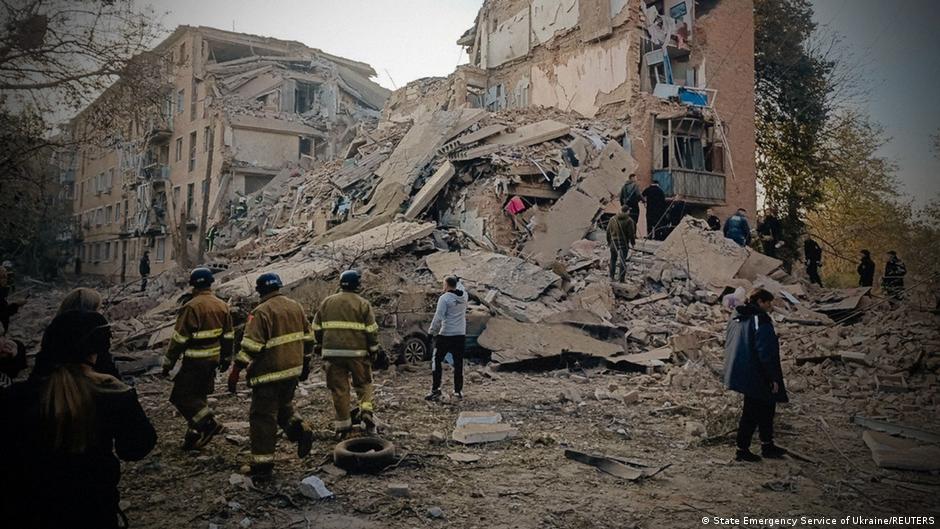
Ukraine said 28 people were killed after a large-scale Russian attack involving missiles and drones, a fresh escalation that also sharpened the financial-market questions surrounding sanctions, energy revenues, payment infrastructure and the broader digital economy.
Ukrainian Interior Minister Ivan Vyhovsky said in a Telegram post on Wednesday evening, October 7, that 28 people had died as a result of the mass shelling by Russian forces. According to him, emergency service workers and police officers were able to pull people from rubble, evacuate them from destroyed buildings and rescue them from fires. In all, 29 people were extracted, evacuated or saved, he said.
Vyhovsky added that debris-clearing work had continued for more than 14 hours in Pryluky, where a missile struck a residential apartment building. The city, in Ukraine’s Chernihiv region, became one of the deadliest reported sites of the attack.
President Volodymyr Zelensky said later the same evening that 100 people were wounded in the attacks. He described the strike as combined, involving many ballistic missiles, many cruise missiles and Shahed drones, and said additional strikes followed during the day with Shahed drones and aerial bombs.
“The strike was combined: many ballistic missiles, many cruise missiles, Shaheds,” Zelensky said, describing the attacks as the killing of children and civilians.
For financial and technology companies operating in or around Ukraine, the latest strikes point to a familiar but still acute set of operational risks: continuity of digital banking, resilience of payment networks, cyber preparedness, staff safety, and the ability of businesses to keep services running during missile and drone attacks. The reported scale of the barrage, which Zelensky said targeted 13 Ukrainian regions using 70 missiles, extensive ballistic weapons and Shahed drones, puts renewed attention on the infrastructure that supports Ukraine’s cashless economy.
Sanctions, oil revenue and financial pressure
Zelensky framed the attack not only as a military and humanitarian event, but also as a consequence of economic incentives. He said it was important that leaders did not stay silent about what had happened and about what, in his words, Russia intended to continue doing: moving toward escalation, killings and shelling.
He argued that Russian President Vladimir Putin did not feel that such actions created problems for him. Zelensky linked that assessment to what he called a weakening of sanctions pressure on Russia and signals about lifting sanctions on oligarchs. In his view, such moves send Moscow signals of a normalization of the war against Ukraine.
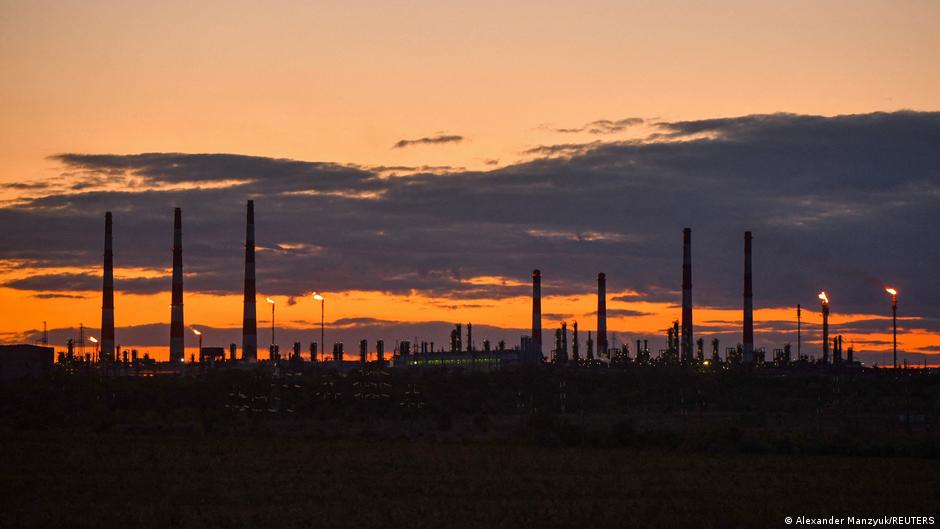
Zelensky said Putin could still sell oil, and that when he calculated profit in dollars and euros, the war still paid off and remained profitable for him. That argument goes directly to a core issue for banks, payment providers, commodity traders and compliance teams: whether sanctions regimes are sufficiently restrictive, consistently enforced and capable of reducing the financial flows that help sustain Russia’s war effort.
The Ukrainian president said this was not only a problem for Ukraine and its people, but a problem for everyone in Europe and the Western world. His comments will resonate with policymakers and financial institutions that have spent years adapting to sanctions screening, anti-money-laundering controls, export restrictions and restrictions on Russian-linked capital.
For FinPulse readers, the significance lies in the connection between battlefield escalation and the rails of the global financial system. Oil sales priced in dollars and euros, sanctions on politically connected individuals, and compliance signals from Western governments all affect how financial institutions assess exposure to Russia-linked entities and sectors. Any perceived easing of sanctions, even if limited, can influence risk appetite, correspondent banking relationships and the cost of compliance across Europe.
Digital resilience under attack
The attacks also renew attention on Ukraine’s wartime digital resilience. Although the source report did not identify specific damage to banks, payment processors, telecoms or data infrastructure, mass strikes across 13 regions create immediate pressure on the systems that support digital finance. Power disruption, damaged buildings, emergency evacuations and communications strain can affect everything from point-of-sale payments to mobile banking access and business continuity plans.
Ukraine’s digital economy has become an important part of the country’s wartime functionality, with citizens, companies and state institutions relying heavily on online services. In that context, missile and drone attacks are not only physical security events. They are also stress tests for networks, authentication systems, cloud backups, fraud monitoring and cyber incident response.
The reported rescue work in Pryluky underscored the human cost behind those operational questions. Vyhovsky said 20 people were killed there, including five children, three of whom were one year old. Chernihiv regional military administration head Vyacheslav Chaus had earlier reported more than 50 people injured as a result of the attack.
For banks and fintech firms, such events can alter short-term risk models and longer-term investment assumptions. Payment providers may need to plan for outages and regional disruption. Digital banks must ensure continuity for users who may be displaced or unable to reach branches. Cybersecurity teams must remain alert to the possibility that kinetic attacks and cyber operations could overlap, even when a specific cyber component has not been reported.
Technology stocks with exposure to Eastern Europe, cloud infrastructure, cybersecurity, defense technology or energy markets can also be sensitive to escalations of this kind. The attack described by Ukrainian officials reinforces the broader market reality that the war remains a persistent geopolitical variable for European equities, energy prices, defense spending, insurance costs and fintech expansion strategies.
Zelensky’s remarks place financial pressure at the center of the policy debate. If the ability to sell oil in major currencies allows Russia to keep financing the war, then sanctions design, payment restrictions, commodity-market enforcement and oligarch-related measures remain central tools of economic statecraft. For the digital-finance sector, that means compliance is not a back-office concern but a frontline exposure to geopolitical risk.
The Ukrainian government’s account of the October 7 attack presents the immediate facts starkly: 28 dead, 100 wounded, 13 regions attacked, 70 missiles used alongside ballistic weapons and Shahed drones, and a deadly strike on a residential building in Pryluky. For financial markets and technology companies, the episode is another reminder that the war’s human toll and its economic consequences are tightly connected.