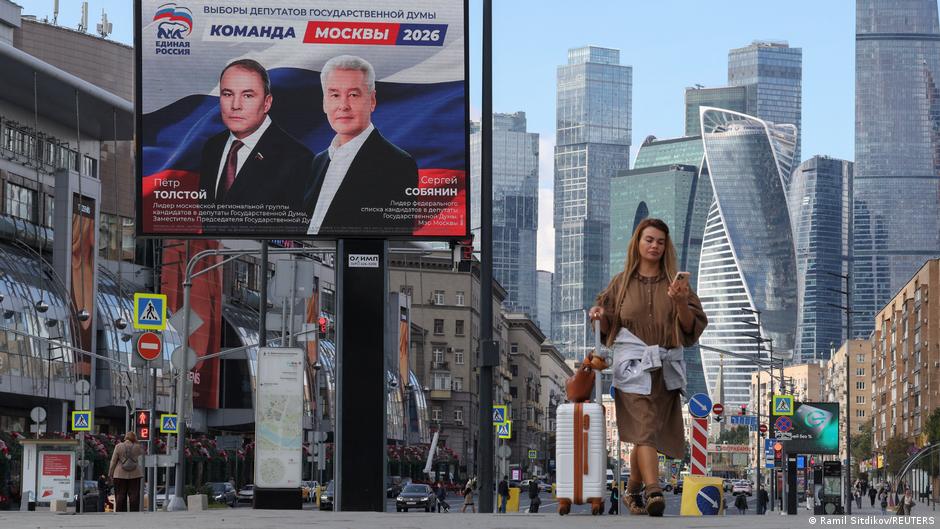
Yabloko Clears Novgorod Threshold, Preserving Route to Future Duma Ballots
The liberal party’s regional result has practical electoral consequences as investors and digital-economy firms track Russia’s narrowing political field.
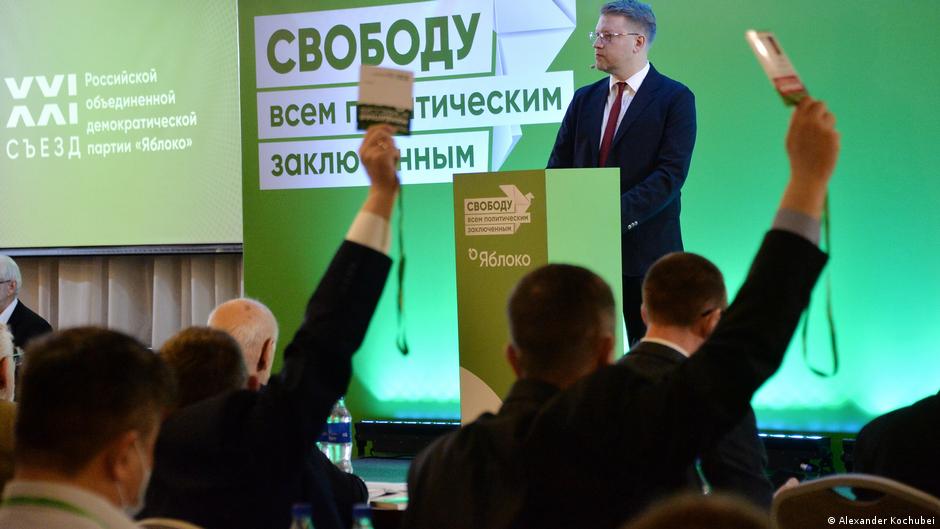
Russia’s liberal Yabloko party is set to enter the Novgorod regional parliament after winning 6.2% of the vote with 96.86% of precinct protocols counted, according to Russia’s Central Election Commission. The result puts the party above the five percent threshold in elections to the eighth convocation of the Novgorod Regional Duma and carries a practical consequence beyond the region: it should allow Yabloko to continue participating in future State Duma elections without collecting voter signatures.
The Central Election Commission reported the figures overnight on Monday, September 21. In the previous election at the same level in 2021, Yabloko received 3.83% of the vote. Its apparent return to a regional legislature therefore marks a notable improvement for a party that has faced mounting legal and administrative pressure during the current election cycle.
For readers focused on fintech, payments, digital banking and the broader digital economy, the Novgorod vote is not a market event in the conventional sense. It does, however, sit inside the political and regulatory environment that shapes Russia’s technology sector, including financial technology, cybersecurity compliance, digital-asset policy and the operating conditions for domestic banks and software companies. Political representation, even at a regional level, can affect whether alternative voices remain formally present in legislative processes where business rules, data governance and public procurement priorities are debated.
Regional Vote With National Implications
According to the reported count, United Russia leads the Novgorod Regional Duma election with 38.37% of the vote. The Communist Party of the Russian Federation has 14.54%, the Liberal Democratic Party has 12.01%, New People has 9.87%, A Just Russia has 7.7%, and the Party of Pensioners has 5.55%.
Yabloko’s 6.2% showing is significant because passing the threshold gives the party a foothold in a regional parliament at a time when its federal electoral access has been challenged. A source in Yabloko, speaking on condition of anonymity, said the result in Novgorod was especially important because the presence of a deputy in a regional parliament would enable the party to keep running in State Duma elections without gathering signatures.
“For the party, it has a quite practical meaning: having a deputy in a regional parliament will allow Yabloko to continue participating in State Duma elections without collecting signatures,” the source said.
The same source said that before these elections, Yabloko had three factions: in Pskov, St. Petersburg and Karelia. The source added that the party lists there had been removed.
The result also comes after a difficult campaign in Novgorod. The Yabloko source said the party’s entire list on the ballot was marked with a label referring to a “foreign agent” because the list’s leader, party deputy chair Anna Cherepanova, had been recognized as affiliated with a “foreign agent.” The source said Cherepanova herself was removed from the election because of an administrative case under Article 20.3 of Russia’s Code of Administrative Offenses. Despite the label and the removal of the list leader, the source said, the party managed to achieve a strong result.
Why Fintech and Tech Investors Watch Political Access
Russia’s financial technology and digital banking sectors operate in a heavily regulated environment where political signals matter. Rules affecting payment systems, online identification, personal data, cybersecurity obligations, digital currencies and banking infrastructure are often shaped through legislation and administrative decisions. While regional parliaments do not set all national financial rules, regional political access can determine which parties remain eligible for federal campaigns and, by extension, which viewpoints have a chance to appear in national debates.
That makes Yabloko’s Novgorod result relevant to the structure of political competition around economic policy. The party’s ability to retain a formal electoral pathway matters at a time when the field of permissible opposition politics has narrowed. For technology companies, banks and investors following Russia-related exposure, such developments are part of the governance backdrop. Political pluralism, judicial decisions and administrative enforcement can all influence perceptions of regulatory predictability, compliance risk and long-term investment conditions.
The legal pressure on Yabloko’s federal campaign has already been visible. On August 10, Russia’s Supreme Court removed Yabloko’s federal list from the State Duma election following a lawsuit by Rodina, which accused the party, among other things, of copyright violations and illegal payments for election campaigning. Even so, Yabloko candidates in single-member districts are taking part in the vote.
Yabloko has also stood apart from other Russian parties in one major respect: among Russian parties, it was the only one to oppose the war in Ukraine. After the party was sidelined, Russian President Vladimir Putin had “excluded the last significant voice of opposition” from the electoral process, Jürgen Hardt, a foreign policy representative of the CDU/CSU parliamentary group in the Bundestag, said in a comment to DW.
For the digital economy, the immediate takeaway is not that a regional result will directly alter payment regulation or technology-stock performance. Rather, the Novgorod count helps determine whether one of Russia’s remaining liberal political organizations can preserve institutional access. That access may matter in future debates over the country’s economic model, the role of the state in technology markets, and the degree of scrutiny applied to rules governing banks, platforms, cybersecurity and digital finance.
With 96.86% of protocols counted, the final arithmetic still depends on completion of the official tally. But the reported 6.2% result places Yabloko above the required threshold and, if confirmed, gives the party a regional mandate with consequences that extend beyond Novgorod’s legislature.