Drone Strike on Russia’s Arctic Gas Hub Raises Digital Market Risk
The first reported Ukrainian drone attack on Yamal highlights how energy infrastructure shocks can reverberate through payments, banking risk and tech markets.
Ukrainian drones have attacked Russia’s Yamalo-Nenets Autonomous District for the first time, according to regional governor Dmitry Artyukhov, marking a significant extension of the geography of strikes against Russian territory and raising new questions for markets that price energy, infrastructure and technology risk.
Artyukhov said on Wednesday, September 9, that a fire broke out at an industrial facility in Novy Urengoy after drone debris fell on the site. Official data cited by the regional authorities said there were no deaths or injuries. The governor said the attack had been repelled, while the size and nature of the damage were still being assessed.
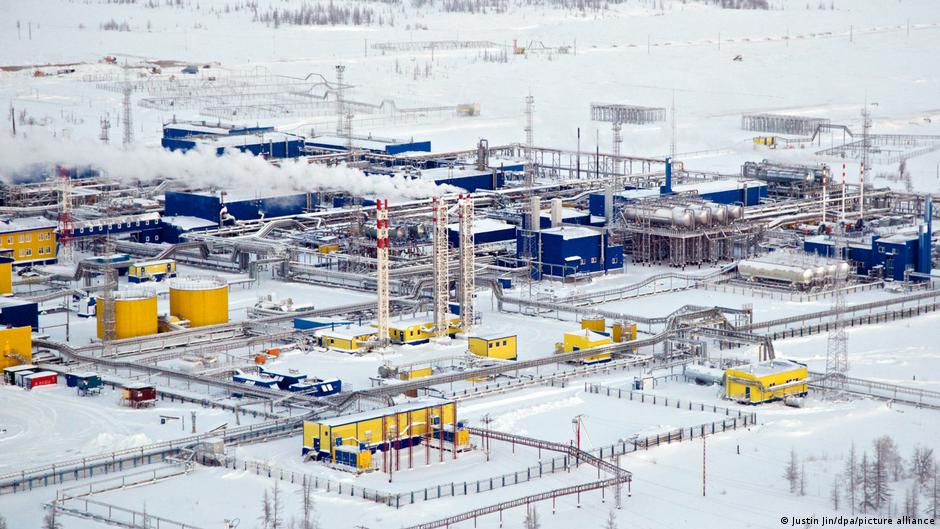
The Yamalo-Nenets Autonomous District is one of the most important energy regions in Russia. It accounts for an estimated 80% of Russian natural gas production, making any security incident there relevant not only for the energy sector but also for financial infrastructure exposed to commodity volatility, corporate payments and the broader digital economy.
Russian authorities said the attack targeted a fuel and energy facility in Yamal, while the affected enterprise was not officially identified.
Artyom Zhoga, the presidential envoy to Russia’s Urals Federal District, said the target of the attack was a fuel and energy complex facility in Yamal. According to him, personnel at the enterprise had been evacuated in advance. Russian authorities did not specify which company or plant had been struck.
Several media outlets and analytical projects that monitor attacks inside Russia reported that the possible target may have been the gas condensate preparation plant for transport in Novy Urengoy, a facility within Gazprom’s gas infrastructure. The plant is considered one of the key sites for processing gas condensate in the region.
Energy Infrastructure Meets Financial Infrastructure
For FinPulse readers, the importance of the reported attack lies not only in its military or energy dimension. Gas infrastructure underpins cash flows, settlement chains, insurance assessments, collateral values and corporate treasury operations. A fire at an industrial site in a core gas-producing region can quickly become a financial risk event, even before the full extent of physical damage is known.
Digital banks, payment providers and fintech platforms do not operate directly in gas fields, but they are exposed to second-order effects. Energy producers, logistics firms, contractors and regional businesses depend on payment systems, payroll channels and credit lines. When a strategic industrial asset faces disruption, banks and payment processors may need to monitor counterparty risk, transaction flows and operational continuity more closely.
The incident also comes at a time when financial markets increasingly treat infrastructure security as a technology problem. Drones, air-defense systems, industrial monitoring networks and cyber resilience are becoming part of the same risk map. An attack on a remote production hub can affect perceptions of how well critical infrastructure is protected, how quickly damage can be assessed and how reliable data from industrial operators is during a crisis.
Novy Urengoy is located roughly 2,800 kilometers in a straight line from the Russian-Ukrainian border. If reports that the drones were launched from Ukrainian territory are confirmed, the incident could represent the longest known strike by Ukraine’s armed forces on Russian territory since the start of the full-scale war.
That distance matters for market interpretation. The farther the potential reach of drones, the wider the set of assets that investors, insurers and lenders may need to treat as exposed. For technology stocks, the event may reinforce attention on companies involved in surveillance, industrial security, satellite monitoring, cybersecurity and critical-infrastructure analytics. The source reporting does not identify any specific publicly traded company affected by the incident, but the broader risk category is clear.
Commodity Risk and Digital Payments
The plant in Novy Urengoy processes gas condensate from the Urengoy, Yamburg and other fields in the region. Its design capacity is estimated at about 19.5 million tons of feedstock per year. In financial terms, assets of that scale support a web of contracts, invoices, export-related payments, equipment procurement and debt servicing.
Any disruption at a facility of this kind can create administrative and financial complexity even when casualties are avoided. Companies may need to reroute supplies, revise delivery schedules, assess damage, communicate with banks and counterparties, and manage insurance or state support processes. Each of those steps relies on digital records, secure communications and payment rails.
The Russian authorities have not disclosed the precise enterprise hit, and the damage assessment remains unfinished. That limits immediate conclusions about production impact. Still, the attack’s location is enough to make the event notable for financial and technology sectors watching the resilience of Russia’s commodity infrastructure.
For crypto markets, the direct link is less concrete. The source article does not report any cryptocurrency-related activity, sanctions development or blockchain transaction impact connected with the strike. However, geopolitical shocks around energy infrastructure often feed into broader risk sentiment, which can influence volatile digital assets alongside equities and commodities. Any such market reaction would depend on subsequent confirmations about damage, operational disruption and escalation risk.
Cybersecurity is also part of the larger picture, even though the reported incident involved drones rather than a cyberattack. Industrial facilities increasingly depend on digital control, monitoring and communications systems. Physical attacks can therefore trigger renewed scrutiny of cyber-physical resilience: whether operators can isolate systems, maintain data integrity, verify operational status and communicate securely during an emergency.
The first reported drone attack on Yamal expands the perceived geography of infrastructure vulnerability inside Russia. For the digital economy, it is a reminder that payments, banking systems, technology valuations and cyber risk models are closely tied to the physical assets that keep energy and industrial flows moving.