German and Austrian Raids Expose Sanctions Risks in Russia Auto Trade
Investigators say two businessmen used third-country routes to ship vehicles to Russia, highlighting compliance pressure across finance and trade.
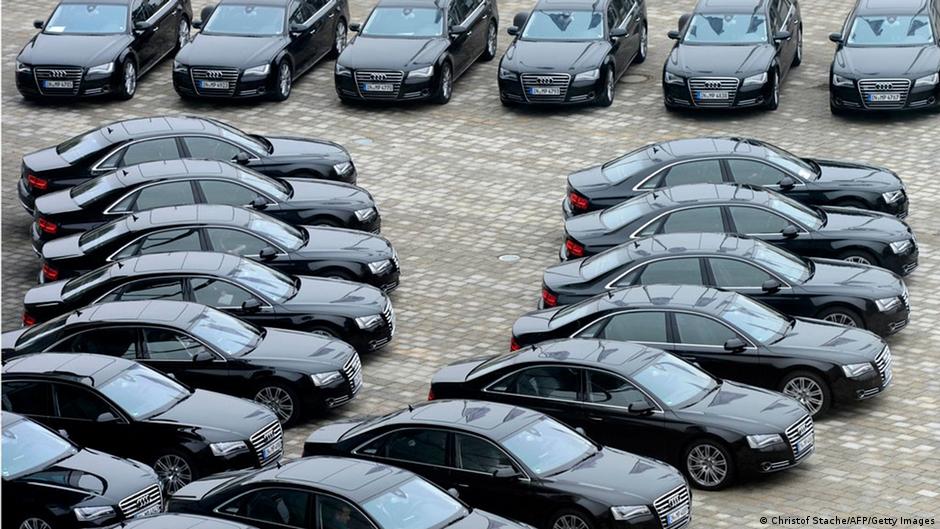
German and Austrian authorities have searched properties linked to two businessmen suspected of exporting vehicles to Russia through third countries in breach of European Union sanctions, in a case that underscores how trade restrictions increasingly depend on financial tracing, bank controls and cross-border data sharing.
Prosecutors in Kaiserslautern said on Tuesday, September 29, that the suspects are believed to have sent 53 passenger cars and six semi-trailer tractors to Russia between autumn 2022 and the end of 2024. Investigators allege the exports violated the EU sanctions regime and were concealed through routing via third countries, including Belarus, Kyrgyzstan and Georgia.
Assets worth about 7 million euros have been seized or frozen, a figure prosecutors describe as the suspected proceeds from the allegedly illegal exports. The case is centered on businessmen in Neustadt an der Weinstrasse in the German state of Rhineland-Palatinate and in Vienna, and involved law enforcement agencies from Germany, Austria and Belgium.
Financial trails become central to sanctions enforcement
The searches took place on September 8 at residential and commercial premises in Neustadt an der Weinstrasse and Vienna. At the request of prosecutors, the Kaiserslautern district court authorized the seizure of assets from the suspects amounting to roughly 7 million euros.
During the searches, German authorities seized two cars, a Porsche and a Mercedes-Benz. In Austria, investigators seized 85,000 euros in cash. A further 278,000 euros was blocked in bank accounts in Germany, Austria and Belgium.
For banks, payment providers and compliance teams, the investigation highlights a familiar sanctions challenge: prohibited trade can move through ordinary commercial infrastructure, while the most visible evidence may appear only after financial institutions flag or process transactions across multiple jurisdictions. The use of third-country routes also raises due diligence questions for correspondent banks, trade-finance providers and digital banking platforms serving importers, exporters and intermediaries.
The case does not include allegations about cryptocurrency use. But it lands in a broader enforcement environment in which regulators expect financial firms to detect attempts to obscure sanctioned destinations, counterparties or end users. That pressure has extended across traditional banks, fintech platforms and digital asset businesses, particularly where cross-border payments, account onboarding and transaction monitoring intersect with high-value goods.
Prosecutors say the suspects allegedly used third countries, including Belarus, Kyrgyzstan and Georgia, to conceal the illegal deliveries.
Investigators also found three hunting rifles and ammunition at the premises of the entrepreneur in Neustadt. A separate investigation has now been opened into a possible violation of weapons legislation. Prosecutors said both suspects have so far exercised their right to remain silent, and the investigation is continuing.
Luxury vehicles remain a pressure point
The latest raids are part of a wider pattern of German enforcement involving exports of high-end vehicles to Russia after the EU imposed sanctions following Moscow's full-scale invasion of Ukraine. In March, a court in Wurzburg sentenced a Bavarian car dealer to six years in prison for supplying 111 luxury vehicles to Russia in violation of sanctions. According to investigators in that case, the vehicles ended up with employees of the FSB, the FSO, Rosneft and the Russian presidential administration.
In July 2025, an employee of a car dealership in Hesse was sentenced to five years in prison for selling 71 luxury vehicles to Russia, also in circumvention of sanctions. German prosecutors were reported in May 2025 to be investigating more than 40 cases linked to deliveries of expensive cars to Russia. Media described a hunt by German justice authorities for dishonest car dealers, while experts noted that only a small share of shadow deliveries was being stopped.
The persistence of such cases shows how sanctions enforcement has moved beyond customs checks and into a more complex network of invoices, logistics documents, bank transfers and beneficial-ownership records. For the digital economy, that creates both risk and opportunity. Fintech firms that move money quickly across borders may face heightened scrutiny if they serve businesses involved in vehicle exports or high-value goods. At the same time, compliance technology providers are likely to see continued demand for sanctions screening, transaction monitoring, document analytics and network analysis tools.
Reuters reported in February that tens of thousands of cars, including German luxury vehicles, were being exported to Russia in circumvention of sanctions through China. Some of the vehicles are manufactured in China by foreign companies, while others are imported into China from abroad. New cars are reportedly registered as used vehicles, which allows sellers to avoid obtaining permission from manufacturers for resale to Russia.
That model points to a vulnerability that is difficult for any single jurisdiction to close. A car may be manufactured in one country, sold through another, financed or paid for through accounts in several others, and ultimately delivered to a sanctioned market under altered documentation. Each step can involve legitimate companies and regulated financial channels, making the quality of data and the speed of information-sharing crucial.
For tech stocks and listed financial firms, sanctions enforcement remains a niche but material compliance theme. Banks with European exposure, payment processors with cross-border merchant bases, and software companies selling anti-financial-crime systems all operate in a landscape where regulatory expectations are rising. The German and Austrian raids show that enforcement agencies are not only pursuing suspected exporters but also targeting the proceeds and banking channels attached to the trade.
The immediate facts of the case remain under investigation, and the two suspects have not made statements to prosecutors. But the direction of travel is clear: sanctions evasion is being treated as a financial-network problem as much as a customs problem. That puts digital banking, payments infrastructure and compliance software closer to the center of Europe's response to illicit trade with Russia.