German Eurofighters Sent to Latvia as Election Security Risks Test NATO Readiness
The deployment underscores how airspace security on NATO’s eastern flank has become a factor for markets, payments resilience and digital infrastructure.
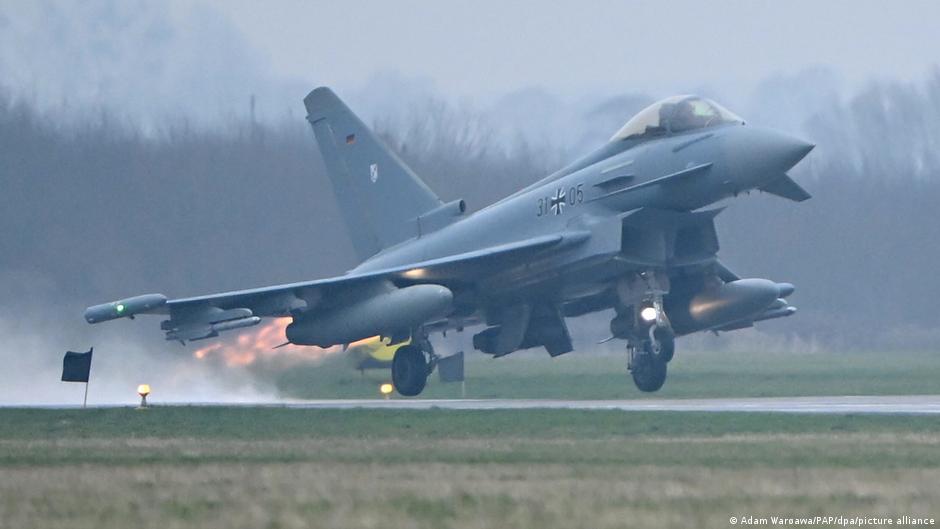
Germany has deployed four Eurofighter jets to Latvia for just over a week to help secure the country’s airspace during parliamentary elections scheduled for October 3, a move that places military readiness, political continuity and digital-economy resilience in the same strategic frame.
The aircraft, drawn from the Bundeswehr’s 74th Tactical Air Wing at Neuburg an der Donau air base, were transferred to the Lielvarde military airfield in central Latvia. Latvia’s defence ministry in Riga announced the deployment on Thursday, September 24. The Eurofighters will support NATO’s integrated air and missile defence system while the country heads into a sensitive electoral period.
For financial markets and the digital economy, the deployment is not simply a defence story. Elections increasingly depend on uninterrupted communications, trusted digital identity systems, resilient banking channels and secure payment infrastructure. In the Baltic region, where governments have advanced digital public services and where banks, fintech firms and cyber agencies operate across borders, airspace violations and drone incursions are part of a broader risk environment watched by investors, payment providers and cybersecurity teams.
Airspace Security Meets Digital Resilience
Riga requested support from NATO allies against the backdrop of repeated violations of Baltic airspace, according to the context cited in the source report. The Baltics have faced recurring incursions by drones since the start of Russia’s full-scale war against Ukraine. In August, NATO fighter jets shot down a drone that had violated Latvian airspace.
That escalation matters for the financial sector because physical security and digital continuity are increasingly connected. Disruption in the region could affect confidence in public institutions, election administration, online banking access, card processing, fraud monitoring and the operations of firms exposed to Baltic or wider European infrastructure. The Latvian election period is therefore a test not only of NATO’s deterrence posture but also of the operating environment for digital services.
Latvian Prime Minister Andris Kulbergs described the German deployment as “a concrete sign of NATO solidarity” and of a joint commitment to protecting Latvia’s airspace and population.
Kulbergs thanked Germany on X for its “readiness to help and close cooperation.” His message underlined the alliance dimension of the deployment at a time when the security of national borders, communications networks and public trust has become inseparable from economic stability.
NATO has guarded the airspace over its northeastern flank since Estonia, Latvia and Lithuania joined the alliance in 2004. The current German deployment is temporary, lasting slightly more than a week, but it fits a longer pattern of allied air policing over Baltic territory. From December 2026, Eurofighter jets are again expected to take on longer-term NATO airspace surveillance from Estonia under the NATO Air Policing mission. Through March 2027, five Eurofighters and their flight crews are set to be stationed at Amari air base in northwestern Estonia.
Why Investors and Fintech Firms Watch the Baltics
The Baltic states are small markets in population terms, but they hold outsized importance in Europe’s digital economy. Their governments have invested heavily in digital administration, cross-border services and cybersecurity coordination. Latvia, Estonia and Lithuania also sit at the intersection of European banking regulation, regional fintech growth and NATO security planning.
For fintech companies, the immediate issue is not whether fighter jets directly affect payment rails. They do not. The market relevance lies in what the deployment signals: NATO is treating election security and airspace defence as linked elements of regional stability. That message can help reduce uncertainty for businesses that rely on continuous connectivity, cloud infrastructure, bank settlement systems and consumer confidence.
Digital banks and payment processors operating in or serving the Baltic region are likely to view the deployment through a risk-management lens. Cybersecurity teams already monitor elections for phishing campaigns, disinformation operations, account takeover attempts and denial-of-service risks. The addition of air policing reflects a wider security posture in which hybrid threats can involve both physical and digital vectors.
Crypto markets may also read the episode as part of a broader geopolitical-risk backdrop rather than as a direct catalyst. In periods of heightened regional tension, crypto trading patterns can be influenced by risk sentiment, capital mobility concerns and demand for alternative transfer mechanisms. The Latvian case does not introduce new crypto regulation or market data, but it reinforces why compliance teams and exchanges monitor Eastern European security conditions closely.
Technology stocks with exposure to European defence, cybersecurity and critical infrastructure may also draw attention from the deployment. The Eurofighter mission highlights sustained demand for integrated defence capabilities, surveillance, secure communications and threat detection systems. However, the source report does not provide market pricing, company exposure or procurement figures, so any direct equity impact remains an investor interpretation rather than a stated fact.
The immediate facts remain clear: four German Eurofighters are in Latvia for the parliamentary election period; they will support NATO’s integrated air and missile defence system; Latvia sought allied backing after repeated Baltic airspace violations; NATO has been responsible for Baltic air policing since 2004; and a longer Eurofighter mission is planned from Estonia starting in December 2026.
For FinPulse readers, the broader takeaway is that Europe’s digital economy increasingly depends on security arrangements that extend beyond data centres and banking networks. In Latvia, election protection now includes both the defence of airspace and the preservation of confidence in the systems that allow citizens, banks and digital platforms to function during a politically sensitive moment.