Putin’s G20 Invitation Becomes Test of Ukraine Talks, Wadephul Says
Germany’s foreign minister says a ceasefire in Ukraine would signal whether Moscow is prepared for serious negotiations.
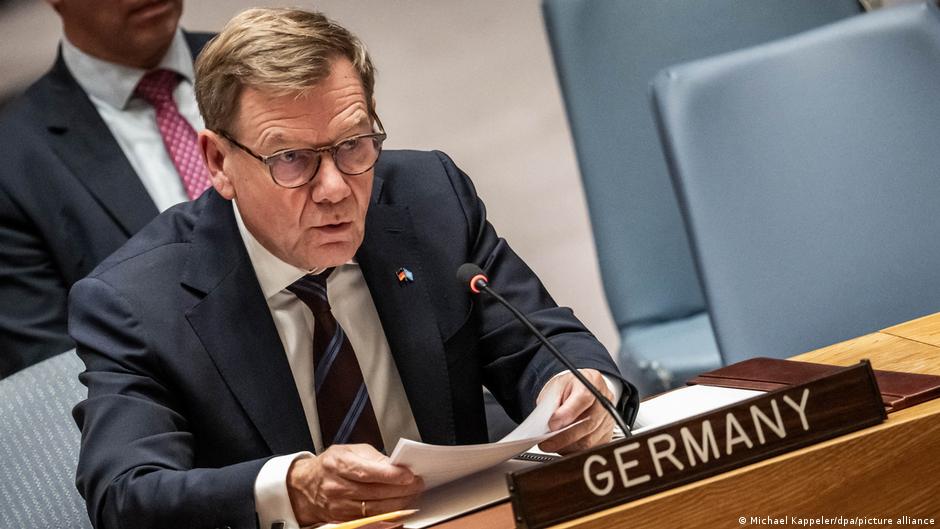
A possible appearance by Russian President Vladimir Putin at the December G20 summit in Miami has become a diplomatic stress test for Moscow’s willingness to negotiate an end to the war in Ukraine, German Foreign Minister Johann Wadephul said on Friday, September 25.
Speaking in Ottawa during a meeting with Canadian Foreign Minister Anita Anand, Wadephul said the United States’ invitation to the summit would serve as a “litmus test” for Putin and the Kremlin. The key signal, he said, would be a ceasefire in Ukraine.
For governments and markets, the issue reaches beyond summit protocol. Russia remains under extensive U.S. sanctions, and Western policy toward Moscow continues to affect international payments, banking compliance, cross-border finance and investor sentiment toward companies exposed to geopolitical risk. A decision on whether Putin attends the G20 would therefore carry consequences not only for diplomacy but also for the broader digital economy environment shaped by sanctions screening, financial controls and cybersecurity concerns linked to the war.
“Russia must negotiate — the sooner, the better,” Wadephul said.
G20 Invitation Puts Sanctions and Diplomacy in Focus
Wadephul emphasized that Germany and other Western allies of Ukraine have repeatedly called on Russian authorities, and Putin personally, to come to the negotiating table. In his view, Russia’s readiness for substantive negotiations would be demonstrated by a ceasefire in Ukraine.
Asked whether countries should boycott the G20 summit if Putin continues the fighting, the German foreign minister said Russia’s participation remained “very hypothetical” and urged observers to wait for developments in the coming weeks.
Anand also said Putin’s potential participation in the summit would not be grounds for a boycott. She argued that diplomacy requires governments to remain engaged even when talks are difficult.
“Diplomacy means that we must stay at the negotiating table and have difficult conversations,” Anand said.
The comments came after U.S. Secretary of State Marco Rubio said the Kremlin leader had been invited to the G20 summit, which is scheduled to take place in December in Miami. Rubio said such a visit would give Putin an opportunity to hold talks with U.S. President Donald Trump and other heads of state and government. The Kremlin has not yet decided how to respond to the invitation.
The prospect of a sanctioned Russian leader attending a major summit in the United States presents a complex policy signal for the financial sector. Banks, payment providers and digital platforms operate in an environment where sanctions against Russian officials and entities require constant compliance monitoring. The source article notes that Putin and other members of the Russian delegation are under U.S. sanctions for actions Washington considers a threat to national security.
That sanctions context is central for fintech firms and digital banking providers. Since Russia’s full-scale invasion of Ukraine, financial institutions have faced heightened scrutiny over Russian-linked transactions, beneficial ownership, correspondent banking exposure and attempts to bypass restrictions. A high-profile diplomatic opening would not by itself remove those restrictions, but it could influence expectations about the direction of future policy if negotiations were to begin.
U.S. Senators Push Back Against the Invitation
The invitation has already drawn opposition in Washington. According to The Washington Post, a bipartisan group of 14 U.S. senators urged Trump to withdraw the invitation.
In their appeal to the White House, Republican and Democratic senators said Putin bears sole responsibility for Russia’s full-scale war of aggression against Ukraine. They warned that allowing him to take part in a G20 summit in the United States raises serious concerns about legitimizing and normalizing authorities that continue to strike civilian targets in Ukraine every day.
The senators also argued that if Putin is not isolated from the international community, he would have less incentive to end the war in Ukraine. Their position highlights the tension between diplomatic engagement and economic pressure: Western governments have used sanctions, export controls and financial restrictions as tools to isolate Russia, while also leaving open the possibility of negotiations if Moscow demonstrates seriousness.
For technology and finance investors, the debate matters because sanctions architecture is deeply embedded in modern digital commerce. Payment companies, crypto exchanges, neobanks, cloud providers and cybersecurity vendors all operate under rules shaped by national security policy. Any perceived shift in the West’s posture toward Russia can affect risk assessments, compliance costs and market expectations for sectors exposed to cross-border regulation.
The war has also intensified cybersecurity concerns for both governments and private companies. While Wadephul’s remarks focused on diplomacy and a ceasefire, the broader economic environment around the conflict includes elevated attention to digital infrastructure, financial system resilience and the security of payment networks. Fintech companies are especially sensitive to this environment because they sit at the intersection of consumer finance, data protection and regulatory enforcement.
At the same time, the statements from Wadephul and Anand suggest that Western allies are not treating attendance at the G20 as a simple yes-or-no measure of legitimacy. Both ministers framed the summit as a potential venue for difficult diplomacy, while Wadephul made clear that a ceasefire would be the signal of Russian seriousness.
The Kremlin’s response remains unknown. Until Moscow decides whether Putin will attend, and until there is evidence of a ceasefire or substantive talks, the invitation remains a political and financial risk marker rather than a policy turning point. For digital economy firms, the practical reality is unchanged: sanctions compliance, geopolitical exposure and cybersecurity vigilance remain central to doing business in a fragmented global market.