Russian Ship Registry Expands as Sanctions Pressure Reshapes Oil Flows
A CREA analysis says Russia’s flag registry grew 36% as shadow-fleet vessels moved away from open registries under diplomatic and sanctions pressure.
Russia’s ship registry has expanded sharply as sanctions pressure on the so-called shadow fleet reshapes the infrastructure behind global energy trade, with knock-on implications for commodity payments, insurance, compliance screening and the digital systems banks use to monitor restricted flows.
From January 2025 to June 2026, the number of vessels sailing under the Russian flag rose by 36%, according to an analysis by the Centre for Research on Energy and Clean Air published on Friday, September 25. Over that period, 107 vessels were added to the Russian-flag registry.
The increase reflects a broader shift in the behavior of open registries that had previously allowed sanctioned cargo to be transported by shadow-fleet ships. CREA said the figures show how diplomatic pressure is narrowing options for vessels linked to Russia’s sanctioned energy trade.
The peak came in December 2025, when 25 new entries were added in a single month. The change has forced shadow-fleet operators into a choice: continue sailing under false flags and risk detention, or enter the Russian ship registry.
Registry Pressure Becomes a Compliance Signal
For banks, commodity traders and payment processors, the shift matters because a vessel’s flag is one of many data points used in sanctions screening and transaction monitoring. As more vessels move into the Russian registry, maritime data, trade finance checks and counterparty risk systems may face a more concentrated signal: Russian-flag status combined with prior sanctions exposure.
CREA noted that Barbados and Palau have fully cleared their registries of sanctioned vessels. Panama reduced the number of such vessels by almost two-thirds compared with its May 2025 peak. The world’s largest ship registries also launched a shared database, RISC, to combat reflagging and other forms of sanctions evasion.
By June 2026, 46 vessels that had previously sailed under the flags of the Comoros or The Gambia were registered in Russia. Other vessels moved under the flags of Sierra Leone and Equatorial Guinea, while some continued operating without a recognized flag.
The compliance burden is not limited to ship registries. Digital banking platforms, correspondent banks, insurers and trade-finance desks increasingly rely on automated screening tools that combine vessel identity, beneficial ownership, voyage history, flag status, port calls and cargo information. Rapid reflagging can complicate those controls, particularly when ships change jurisdictions repeatedly or operate with unclear flag status.
According to CREA, 93 of the 107 vessels added to the Russian registry had previously been under sanctions, while 90 were subject to restrictions from more than one jurisdiction. Ships that transported Russian oil before the first sanctions were introduced changed flags three times more often than before. Sixteen of them also carried Iranian or Venezuelan oil.
Energy Flows Continue Despite Restrictions
After switching to the Russian flag, vessels continued transporting Russian fuel around the world. CREA said oil worth 5.2 billion euros was delivered, mainly to China. Ship-to-ship transfer arrangements were also used in Egypt and in the Red Sea.
Those flows underline the difficulty of enforcing restrictions in a global market where cargo ownership, vessel registration, routing and payment chains can be separated across multiple jurisdictions. For the digital economy, the issue is increasingly one of data integrity: whether banks, trading platforms, insurers and logistics providers can identify risk in near real time before transactions settle.
Crypto markets are not directly cited in the CREA findings, but the broader sanctions environment has made alternative settlement channels a recurring concern for regulators and compliance teams. Energy cargoes moving through opaque ownership structures can increase scrutiny on nonbank payment rails, stablecoin flows and offshore intermediaries, especially where traditional dollar- or euro-based finance becomes harder to access.
Technology providers serving maritime intelligence, sanctions screening, cybersecurity and transaction monitoring could see continued demand as enforcement becomes more data-driven. At the same time, firms exposed to global shipping, commodities and emerging-market payment corridors face greater operational risk if their screening systems fail to detect reflagged or sanctioned vessels.
Arctic Metagaz Incident Highlights Risk Transfer
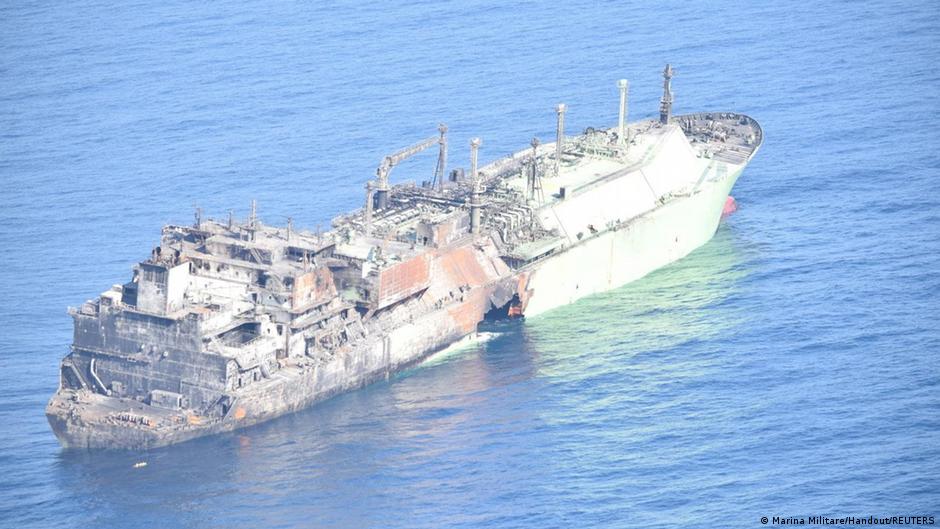
The analysis also points to physical and environmental risks that can become financial and operational liabilities for coastal states and private-sector service providers. In March, the Russian liquefied natural gas carrier Arctic Metagaz caught fire in the Mediterranean Sea. Libya, Malta and Italy had to manage the crisis on their own.
“The Arctic Metagaz incident showed the Russian flag for what it really is: a shield for dangerous vessels, providing no support in the event of a catastrophe and leaving coastal states with the task of managing risks and dealing with the consequences,” analyst Luke Wickenden said.
Arctic Metagaz is one of roughly ten gas carriers used to transport sanctioned LNG from Russia’s Arctic LNG 2 terminal to the port of Beihai on China’s southern coast. In February 2026, Arctic Metagaz left the port of Murmansk after loading and was likely heading toward Egypt’s Port of Suez, according to gCaptain. Since 2024, the vessel has been under U.S. and U.K. sanctions.
The case illustrates how sanctions evasion, maritime safety and financial infrastructure intersect. When a sanctioned vessel is involved in an emergency, insurers, port authorities, banks and logistics providers may all face difficult decisions about whether and how to provide services without violating restrictions.
For fintech and digital banking companies, the practical lesson is that sanctions compliance is becoming less about static watchlists and more about network analysis. A vessel’s registry, cargo history, ownership links, route behavior and counterparties all feed into risk scoring. The growth of Russia’s flag registry, as documented by CREA, adds another variable to a complex enforcement landscape that is already shaping trade finance, payments compliance and the market for regulatory technology.