Schroeder’s Russian Retail Role Raises Fresh Questions for German Business Risk
The former German chancellor’s post at Hyperglobus has drawn criticism as companies weigh political exposure, asset risk and Russia-linked governance.
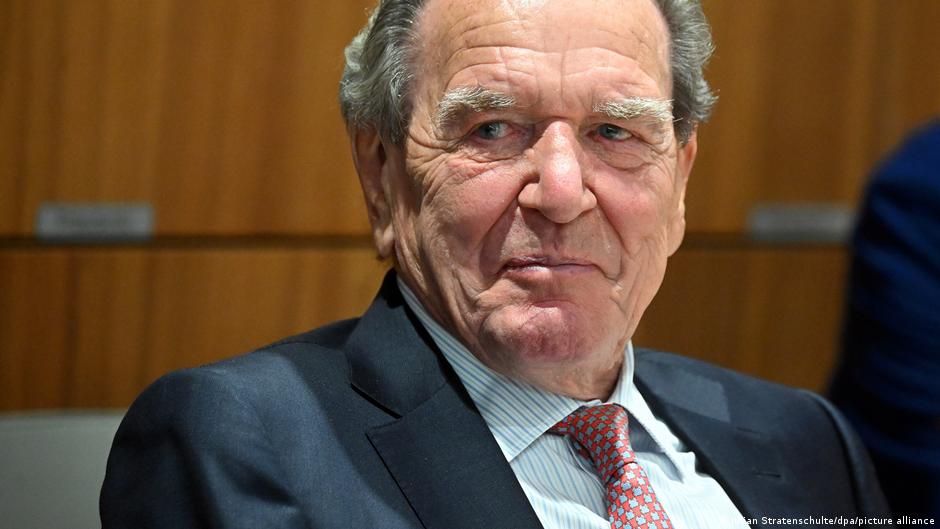
Former German Chancellor Gerhard Schroeder has taken a seat on the supervisory board of Hyperglobus, the company operating the Globus hypermarket chain in Russia, triggering sharp criticism from German politicians and economists and reopening a broader debate over corporate exposure to Russia.
The appointment matters beyond retail. For investors, banks, insurers and technology vendors that still assess Russia-linked counterparties, the case highlights how governance, sanctions risk and political access can become central to business continuity. In a digital economy shaped by payment restrictions, cross-border compliance screens and heightened cybersecurity concerns, the presence of a former head of government in a Russian operating company is being read in Germany as more than a personnel move.
Roderich Kiesewetter, a Bundestag member and foreign policy expert from the governing Christian Democratic Union, commented on the news on Saturday evening, October 3. He described Schroeder’s new role as “a betrayal of Europe and his own country.” In a post on X, Kiesewetter wrote that anyone who publicly and demonstratively shakes Schroeder’s hand is seeking to show where they stand.
Political scientist Thomas Jaeger of the University of Cologne also criticized the development on X, calling it a new lobbying assignment for Schroeder in Russia. He asked whether German President Frank-Walter Steinmeier had known about it when, a few days earlier, he greeted Schroeder, “the only one of all,” according to Jaeger’s post.
“Schroeder has a new lobbying assignment. In Russia. Where else?”
The references to a handshake appear to concern the ceremony marking the 75th anniversary of Germany’s Federal Constitutional Court, held on September 28 in Karlsruhe. Steinmeier attended the event and, upon entering the hall, shook hands with several people, including Schroeder, who was seated in the front row as an honorary guest.
Governance Risk Meets Russia Exposure
The controversy arrives at a time when European companies and financial institutions continue to navigate Russia-related operational risk. Payments infrastructure, correspondent banking relationships, digital identity checks and compliance tools have all become more important in deciding whether a company can safely do business with entities connected to Russia. Even when a business is formally separated from its European parent, questions remain over ownership, control, governance and political protection.
Hyperglobus became legally and organizationally independent from the Russian business of the Globus retail network on January 1, 2025, according to Isabel del Alcazar von Buchwald, a spokesperson for Globus Gruppe, in comments to DW. At the same time, she said the shareholders of Russia’s Hyperglobus are the same German businesspeople as those of the rest of the group.
That structure is likely to draw attention from compliance teams because legal independence does not automatically end reputational or financial linkages. For banks processing payments, payment-service providers screening transactions, cybersecurity firms supplying systems, and enterprise software providers managing access, Russia-linked corporate structures can generate a persistent due-diligence burden.
German economist Jan Schnellenbach, professor of microeconomics at Brandenburg University of Technology in Cottbus, accused the former chancellor of shamelessness. In a post on X, he asked whether Schroeder had not been said to be too ill to appear before a German court, and then questioned whether Russian money had healing powers.
Janis Kluge, a German economist and head of a research division at the Berlin-based German Institute for International and Security Affairs, argued that bringing Schroeder into Hyperglobus management amounted to the company buying itself lifetime insurance against suffering the fate of Metro, the German retail chain whose Russian assets were transferred into temporary management by decree of Vladimir Putin.
Kluge wrote on X that Schroeder was once again monetizing his access to Putin. That claim captures the core concern for many observers: that political proximity can function like a form of unofficial risk management in a market where formal shareholder rights may not provide sufficient protection.
Implications for Fintech and Investors
For fintech firms, digital banks and listed technology companies, the Schroeder appointment is another reminder that Russia exposure is not only a sanctions-list question. It can involve reputational assessment, beneficial ownership mapping, board composition, politically exposed persons and the resilience of digital operations under pressure. Those factors affect whether payment flows are approved, whether vendors remain connected and whether investors treat a company as investable.
Companies with Russia-facing operations may also face greater cybersecurity scrutiny. Retail networks depend on payment terminals, customer data systems, logistics platforms and digital banking integrations. Any governance controversy involving a Russia-linked operator can therefore affect not only public perception but also counterparties’ willingness to maintain technical and financial relationships.
Schroeder has long been regarded by many observers in Germany as a lobbyist for Russian businesses. He previously held leadership roles at Rosneft and at the company operating Nord Stream. Hyperglobus confirmed to DW on October 2 that the former German chancellor would become a member of its supervisory board and would oversee the retailer’s strategic development.
The criticism from German political and economic figures shows how corporate appointments connected to Russia can ripple through the wider financial ecosystem. In a market environment where sanctions compliance, digital payments and cross-border technology services are tightly linked, a single board appointment can become a test of how Europe’s business community defines acceptable Russia risk.